Blog
Hyderabad: The City of Nizams and Pearls
Welcome to our deeper dive into Hyderabad City of Nizams — beyond the essentials covered in our full Hyderabad Halal travel guide, this guide uncovers the fascinating royal history, hidden treasures, and living legacy behind Hyderabad’s famous nickname.
From Cyberabad to the City of Nizams
Today, the commercial world knows Hyderabad as “Cyberabad,” a thriving hub of IT business firmly seated in Modern India. However, once the princely state of Hyderabad Deccan, the city’s ancient quarters still carry the nickname “City of Nizams,” a name that harks back to a stronghold of Indo-Islamic grandeur at its most impressive.
A Legacy of Dynasties
Before the Nizams’ reign, Hyderabad was ruled by various dynasties — the Satavahanas, Ikshvakus, Kakatiyas, the Bahmani Sultanate, and the Qutb Shahi dynasty. Each left behind a remarkable legacy of ancient monuments, mosques, palaces, and mausoleums, forming the foundation of what is now one of India’s richest centers of Islamic heritage. The Bahmani Sultanate, founded in the 14th century, ruled over a large part of Southern India, including Hyderabad, before the Qutb Shahi dynasty succeeded it in the 16th century — building the famous Charminar, Golconda Fort, and Mecca Masjid that define the city today. Because this layered history spans nearly seven centuries, Hyderabad remains a genuinely important stop for anyone exploring the Islamic heritage of India, offering Halal-friendly tours in Hyderabad that trace this remarkable dynastic journey from sultanate to empire.
The Rise of the Nizams
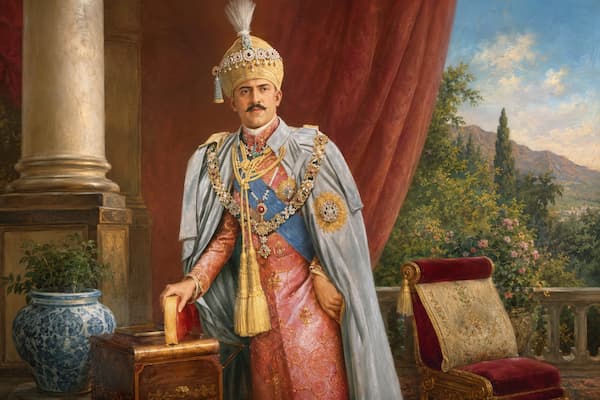
Hyderabad became an independent kingdom under the Asaf Jahi Nizams in the 18th century, ruling as the Princely State of Hyderabad from 1724 to 1948 and becoming among the wealthiest rulers in the world. The Nizams were great patrons of architecture, literature, music, and dance, supporting the construction of impressive palaces and turning Hyderabad into a center of literary activity. A 1937 cover of TIME Magazine even celebrated His Exalted Highness the Nizam of Hyderabad VII as the richest man in the world, cementing Hyderabad’s status as the princeliest of all India’s states.
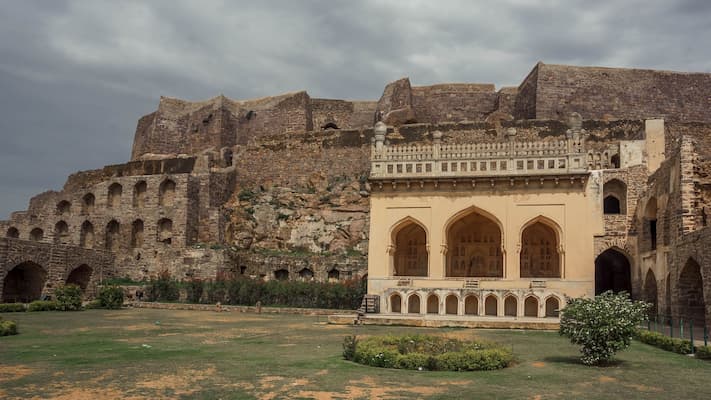
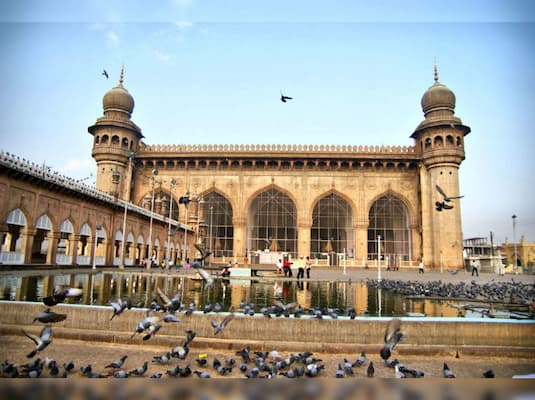
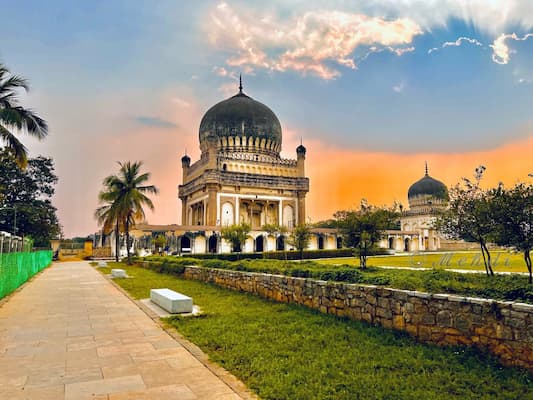
Golconda Fort: Home of the World’s Most Famous Diamonds
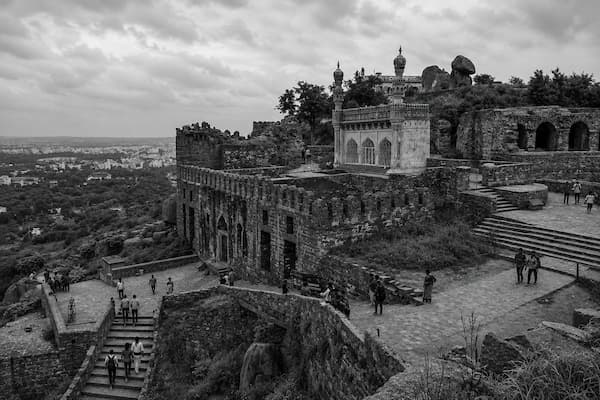
Golconda Fort is undoubtedly one of India’s most magnificent fortress complexes, with history dating back to the early 13th century under Kakatiya rule, later expanded by the Qutub Shahi kings. Because Golconda was once the world’s most important diamond trading center, some of history’s most famous diamonds passed through here — the Koh-i-Noor, now part of the British Crown Jewels; the Hope Diamond, now displayed at the National Museum of Natural History in Washington D.C.; and the Darya-i-Noor, a rare pink diamond now part of the Iranian Crown Jewels collection. Visitors today can explore the fort’s Durbar Hall, Royal Palace, and the nearby Qutb Shahi Tombs.
Mecca Masjid: Bricks from the Holy City
Mecca Masjid, built in the late 17th century under Sultan Muhammad Quli Qutb Shah, gets its name from a genuinely remarkable detail: bricks made from soil brought all the way from Mecca were used in the construction of its central arch. One of the largest mosques in India, it can accommodate up to 10,000 worshippers, its large arches and domes making it one of the finest examples of Islamic architecture in the country.
Qutb Shahi Tombs: A Dynasty’s Final Resting Place
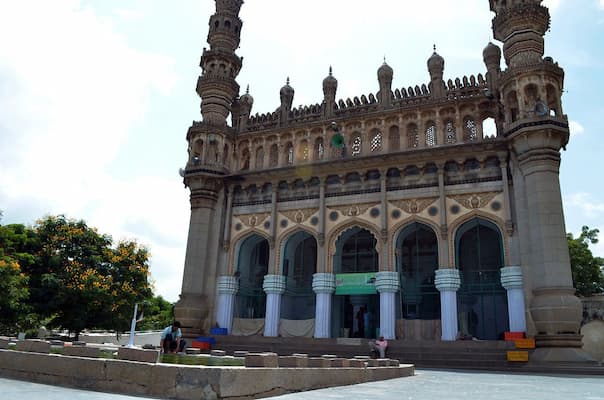
Near Golconda Fort, the Qutb Shahi Tombs showcase the distinctive domes and intricate carvings typical of Indo-Islamic architecture from this era. The most prominent tomb belongs to Mohammed Quli Qutb Shah, the founder of Hyderabad city himself, with the complex offering stunning views of the surrounding landscape alongside its historical significance.
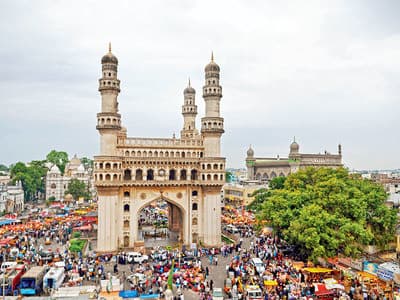
Charminar: The Heart of the Old City
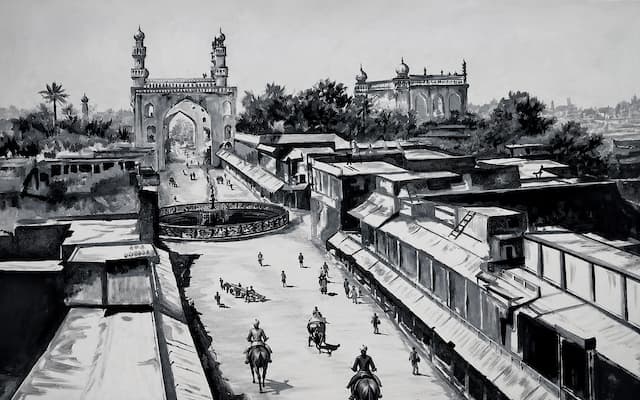
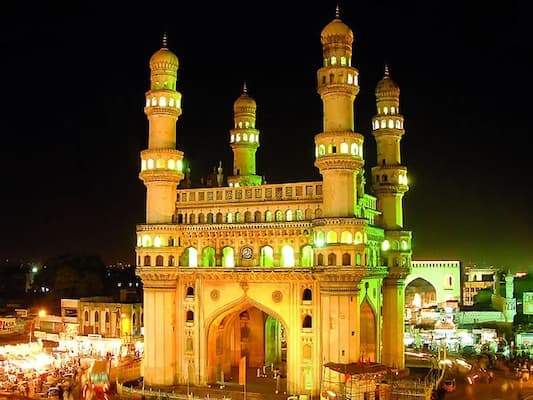
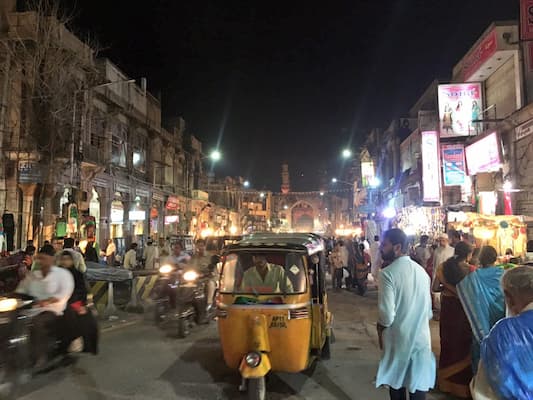
Our heritage walk begins at Charminar sits in the heart of Hyderabad’s old city, surrounded by bustling markets and historical landmarks. Built by Mohammad Quli Qutub Shah of the Qutb Shahi dynasty in 1591, its four minarets — each standing 56 meters tall — give the monument its name, meaning “four minarets” in Urdu. Because it was built to commemorate the end of a deadly plague that had ravaged the city, Charminar remains an important symbol of Hyderabad’s resilience and a genuine highlight of any Muslim-friendly tour in Hyderabad.
By day, Charminar’s granite and limestone facade glows warmly against the sky, its intricate arches framing views of the surrounding old city streets below. As evening falls, the monument transforms entirely — illuminated against the night sky, Charminar becomes one of the most photographed symbols of Islamic heritage of India, drawing both locals and travelers to admire its beauty after dark. A beautiful mosque on its top floor showcases exquisite decorative arches and intricate wall carvings, offering a peaceful place of prayer at the very center of the city.
For anyone seeking Halal-friendly tours in Hyderabad, Charminar is more than just a monument — it’s the beating heart of the old city, surrounded by halal-certified eateries, bustling bazaars, and centuries of Indian Islamic culture that continue to thrive in its shadow to this day.
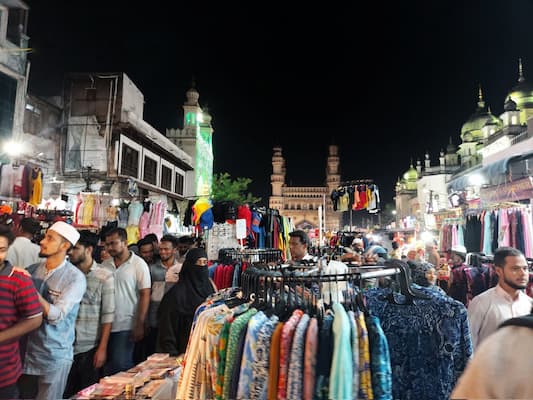
Laad Bazar: A Shopper’s Paradise
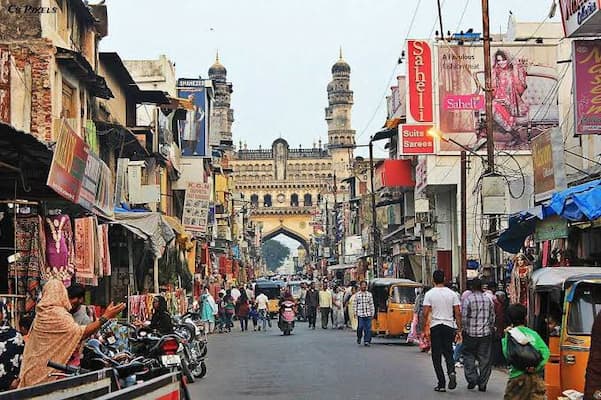
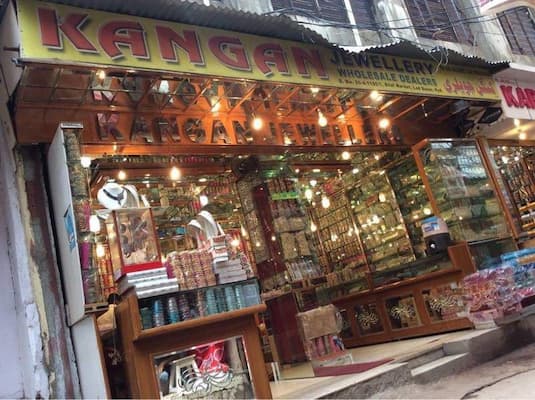
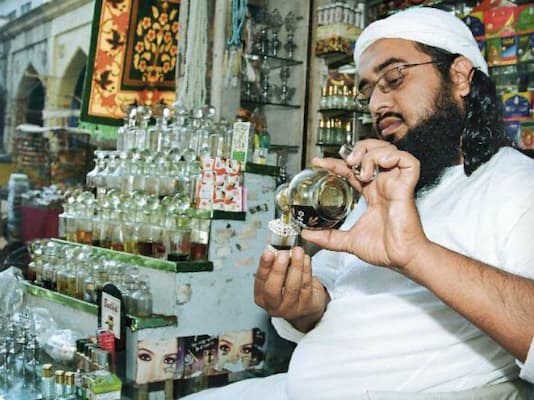
In the Old City, the famous Laad Bazar dates back to the time of the Nizams, filled with the sounds of vendors, the smells of traditional spices, and stalls of colorful bangles and traditional jewelry. In addition to jewelry, the market offers traditional clothing, perfumes, and handicrafts, its lively, energetic atmosphere making it a must-visit for any Hyderabad heritage walk. For Muslim-friendly tours in Hyderabad, Laad Bazar offers a genuinely immersive slice of everyday Indian Islamic culture — halal snacks, modest clothing options, and warm local hospitality are all easy to find as you browse the narrow, colorful lanes alongside families and shopkeepers who have called this market home for generations.

Chowmahalla Palace: Four Palaces of the Nizams
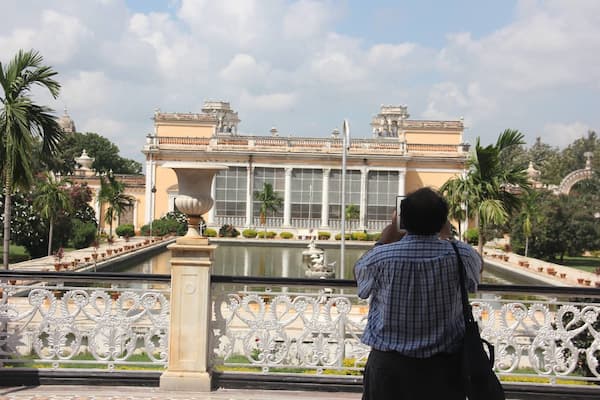
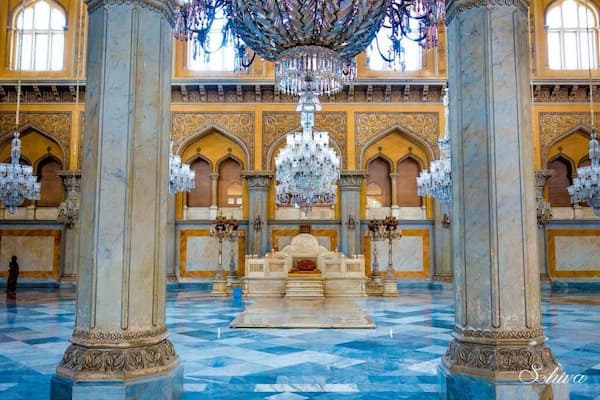
The Nizams built Chowmahalla Palace, meaning “four palaces,” in the 18th century as their official residence, serving as the seat of the Asaf Jahi dynasty for generations. Its complex — Tahniyat Mahal, Afzal Mahal, Mahtab Mahal, and Aftab Mahal — each showcases unique architecture and design, blending Persian, European, and Indo-Islamic influences into a single, harmonious royal estate. Because the palace once hosted grand coronations, royal receptions, and state ceremonies, walking through its halls today offers a genuine glimpse into the pomp and prestige of Hyderabad’s royal past.
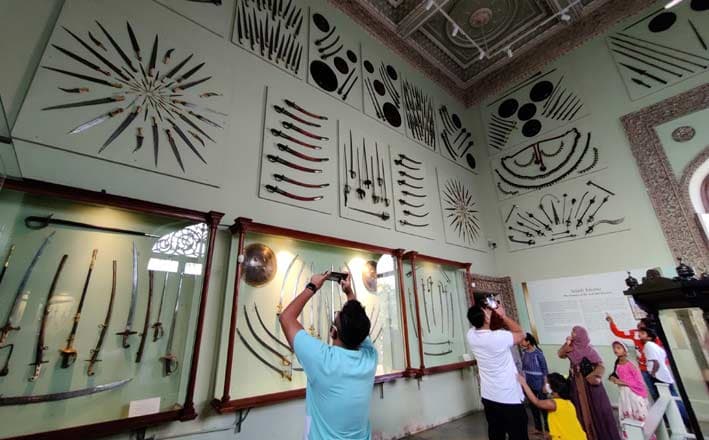
Today restored to its former glory, the palace’s beautiful courtyards, fountains, and gardens house a stunning collection of artifacts, including weapons, clothing, and vintage cars once used by the Nizams themselves. In addition to its architectural grandeur, Chowmahalla Palace remains one of the most rewarding stops for Muslim-friendly tours in Hyderabad, offering families and history enthusiasts alike a rich, immersive look at the Indian Islamic culture that shaped this remarkable dynasty for over two centuries.
Salar Jung Museum: A World-Class Collection
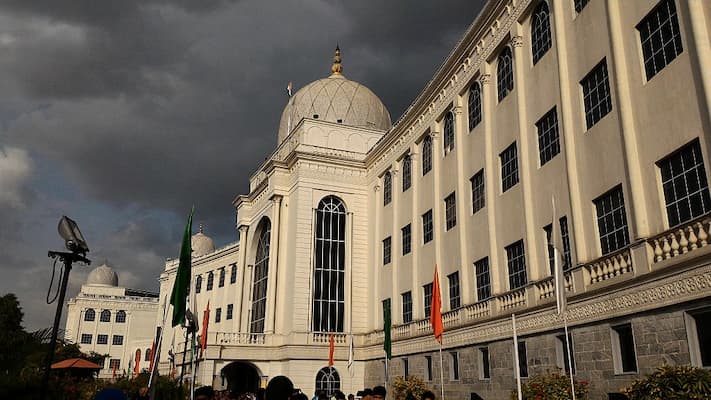
Established in 1951 and named after Mir Yousuf Ali Khan (Salar Jung III), a former Prime Minister of Hyderabad, the Salar Jung Museum is one of India’s largest, housing over 46,000 art objects, 8,000 manuscripts, and 60,000 printed books spanning the 2nd century BCE to the early 20th century. Its collections range across Indian, Middle Eastern, Persian, Nepalese, Japanese, Chinese, and Western art, with a special “Founder’s Gallery” and famous exhibits including the Veiled Rebecca marble statue and an extensive Jade Room.
Nizam Museum: Personal Treasures of Royalty
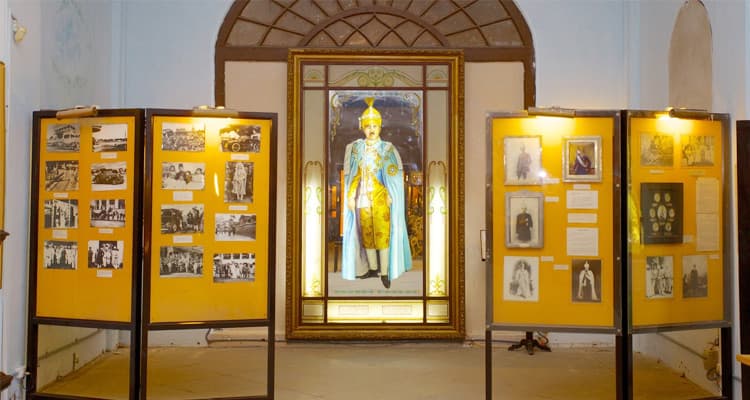
Housed within the Purani Haveli, the former palace of the Nizams, the Nizam Museum showcases their personal belongings — vintage cars, clothing, weapons, and furniture. Notable exhibits include a gold chair and a diamond-studded gold tiffin box, alongside photographs and paintings chronicling the lifestyle and culture of the Nizams.
Falaknuma Palace: Mirror of the Sky
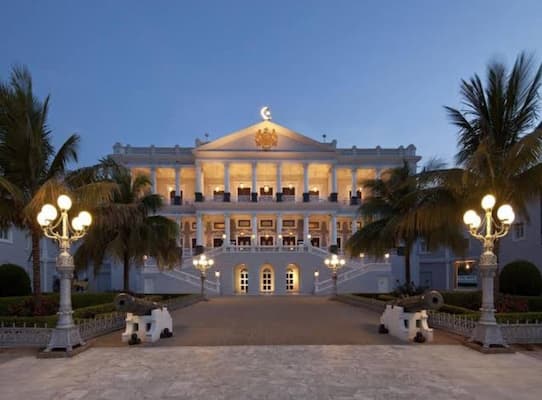
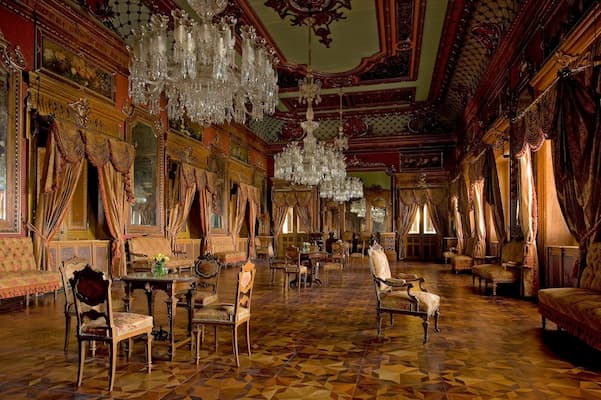
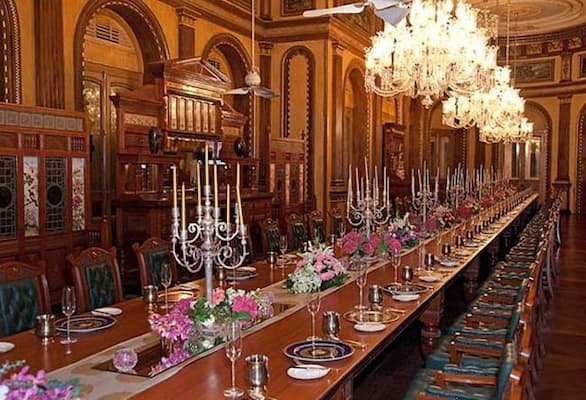
Nawab Vikar-ul-Umra built Falaknuma Palace, meaning “Like the Sky,” in the 19th century, before the 6th Nizam of Hyderabad purchased it and transformed it into one of the grandest royal residences in India. English architect William Ward Marrett designed the palace in a blend of Italianate and Tudor styles, featuring intricate carvings, exquisite stucco work, and beautiful frescoes throughout — a genuine architectural marvel that took nearly nine years to complete.
Because the palace sits atop a hill on the city’s southeastern edge, it commands sweeping views over Hyderabad, living up to its poetic name. Its collection includes a grand dining table spanning over 100 feet — seating up to 101 guests — alongside rare manuscripts, a magnificent library once said to rival the finest in Europe, and an extensive collection of Venetian glass and chandeliers imported from across the continent.
Today, the palace lets visitors experience the Nizams’ opulent lifestyle firsthand, whether staying overnight or simply visiting for a guided tour or afternoon tea. For anyone exploring Muslim-friendly tours in Hyderabad, Falaknuma Palace offers a rare, tangible connection to the grandeur of the Islamic heritage of India — a fitting tribute to one of the city’s most extraordinary royal legacies.
Family-Friendly Attractions Beyond the Monuments
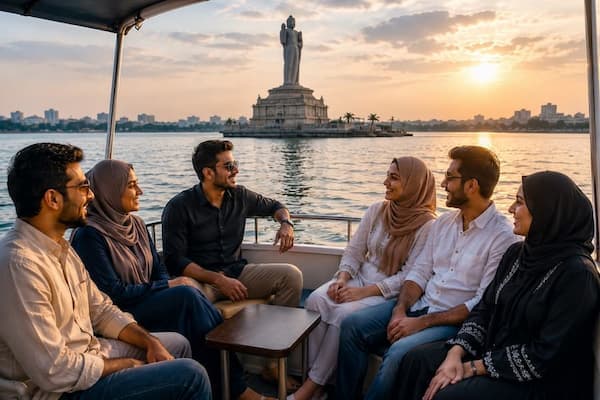
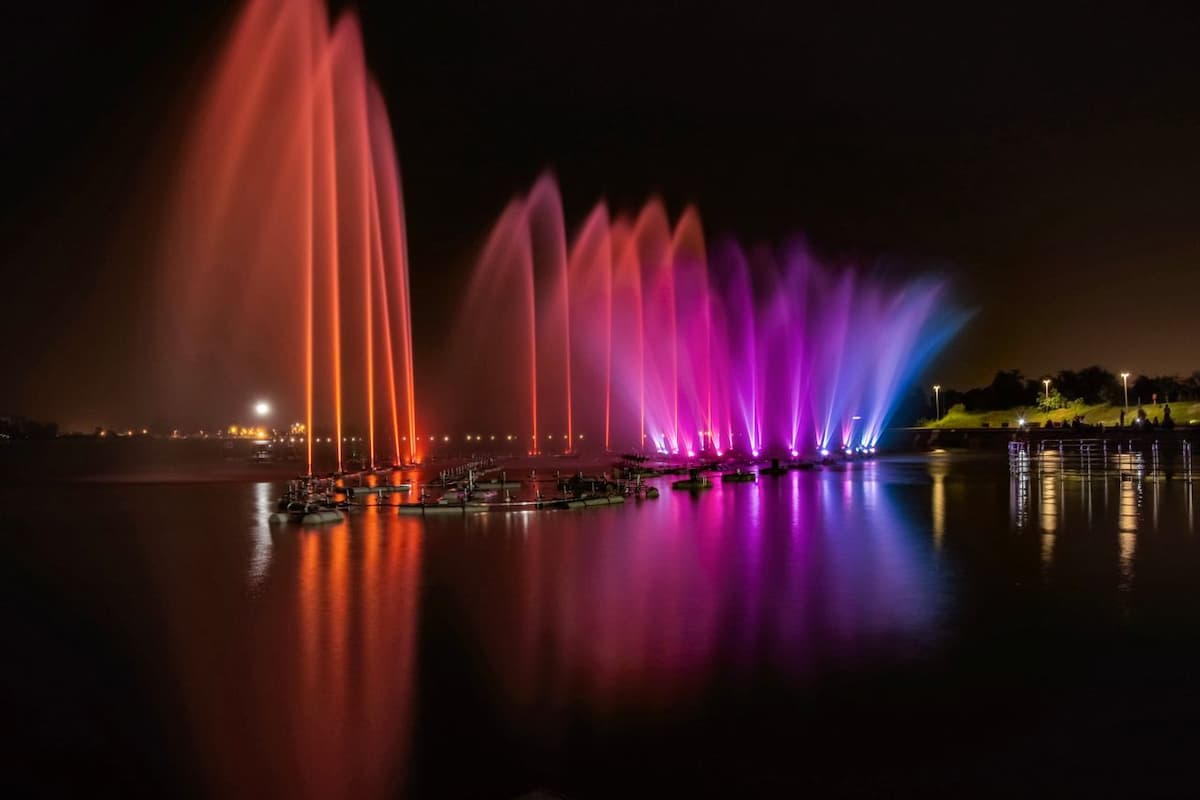
Hyderabad offers plenty beyond its historic monuments and bazaars, making it an excellent choice for a Muslim-family holiday trip in Hyderabad. Snow World, India’s first snow-based theme park, gives children and adults alike a rare chance to enjoy snowball fights and ice sculptures in the middle of the Deccan heat. Birla Planetarium offers engaging astronomy shows and a science museum, perfect for curious young minds, while nearby Lumbini Park provides a relaxing green space with paddle boats on Hussain Sagar Lake and a musical fountain show in the evenings. Together, these family-friendly spots round out a well-balanced Hyderabad itinerary, blending Islamic heritage sightseeing with genuinely fun, halal-friendly leisure activities for the whole family.
Hussain Sagar: The City’s Shimmering Lake
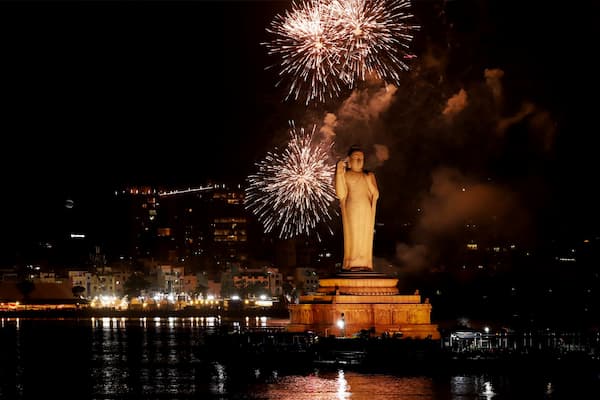
Built in 1563 during the rule of Ibrahim Quli Qutb Shah, Hussain Sagar is a large artificial lake spanning over five square kilometers, an important source of drinking water for the city and home to an 18-meter statue of Lord Buddha — one of the tallest Buddha statues in the world. Visitors can enjoy boating, water sports, and evening strolls along its illuminated promenade.
The City of Pearls: A Trading Legacy
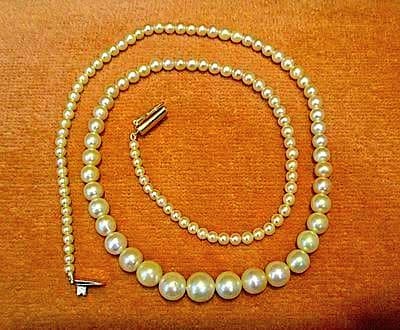
Hyderabad earned its nickname “City of Pearls” through centuries as a center for pearl trading, with traders once carrying pearls from Iran through Kerala’s spice coast to Hyderabad. Because the Qutub Shahi kings and Nizams admired pearls so deeply, craftsmen flocked here from across the Arabian Gulf, establishing a pearl processing and trading industry that has supplied fine jewelry to the world for over 400 years.
A Living Indo-Islamic Culture
Hyderabad’s Indian Islamic culture and traditions have been passed down through generations, visible in architectural landmarks at every turn. The city’s hospitality, warmth, and respect for tradition remain evident in its old city’s maze of lanes, markets, and historic bazaars, making Hyderabad a genuinely rich cultural experience for Muslim travelers exploring the Islamic heritage of India. Because this living culture blends so seamlessly into daily life — from the call to prayer echoing through the old city to the shared meals and warm greetings of local families — Hyderabad remains one of India’s most rewarding destinations for Halal-friendly tours in Hyderabad, offering a genuine, unfiltered glimpse into how deeply Indian Islamic culture continues to shape everyday life here.
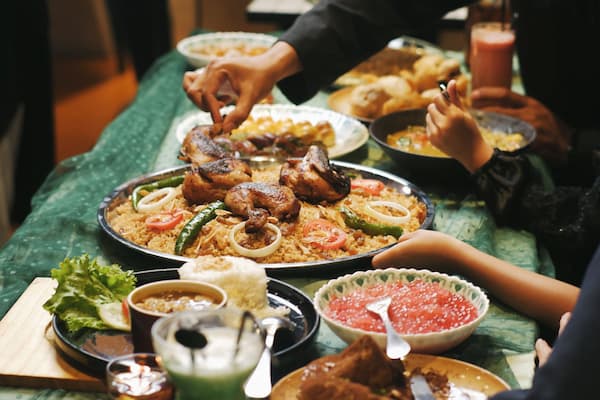
Hyderabad: The World Capital of Biryani
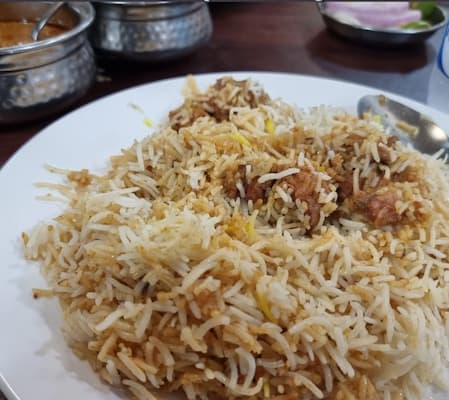
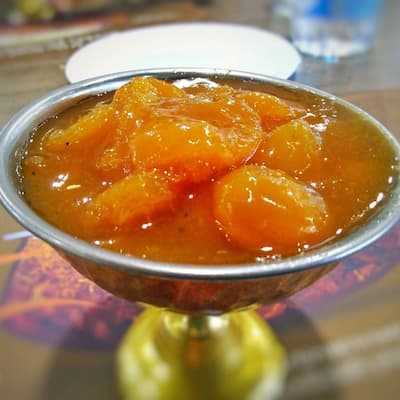
Hyderabad is often called the “World Capital of Biryani” for its rich, flavorful version of the iconic rice dish. In addition to biryani, the city is famous for haleem, qorma, kebabs, and sweet dishes like Qubani ka Meetha, Double ka Meetha, and Sheer Khurma — a culinary heritage blending Mughal, Persian, and Turkish influences into something uniquely Hyderabadi. Because halal-certified restaurants serving these specialties are found throughout the city, from Old City eateries to modern dining spots, a Muslim-family holiday trip in Hyderabad is never short on genuinely delicious, halal-friendly food — making the city’s culinary scene just as much a highlight as its monuments.
Explore Hyderabad’s Halal-Friendly Tour Packages
Inspired to visit the City of Nizams for yourself? Halal Trip India offers a range of Muslim-friendly Hyderabad tour packages to suit every pace and interest.
For a quick heritage getaway, choose our Hyderabad 4-Day Halal Tour, covering Charminar, Mecca Masjid, Golconda Fort, and the Qutb Shahi Tombs. If you’d prefer a more relaxed pace with extra time for family leisure, our Hyderabad 5-Day Halal Tour adds a full day at Ramoji Film City and more time at Falaknuma Palace.
Want to pair Hyderabad’s Nizami heritage with North India’s Mughal legacy? Our Hyderabad Taj Mahal Tour extends the journey to Delhi and Agra over 8 days, while our Hyderabad Golden Triangle Tour completes the full circuit with Fatehpur Sikri and Jaipur over 10 days.
Every one of our Hyderabad tour packages is built with Muslim-friendly hotels, certified-halal dining, and prayer facilities at every stop. For a broader look at the city, see our full Hyderabad Halal Travel Guide.
Discover more of Hyderabad’s royal legacy with Halal Trip India — explore our full Hyderabad Halal travel guide for practical travel tips, dive into the pan-India story in our Islamic Heritage of India, or browse our Halal holiday packages to start planning your next Muslim-friendly journey across India.