
Blog
Agra Guide: Taj Mahal & Mughal Heritage
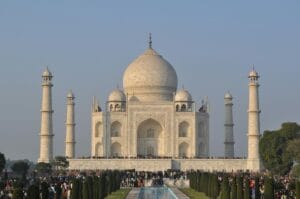
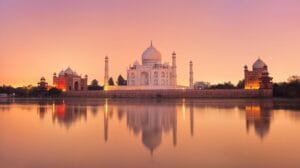
Welcome to our Agra guide — the Mughal heritage city of Agra stands as one of the most mesmerizing Halal-friendly travel destinations, ranked among the world’s most visited locales. A journey to India remains incomplete without a visit to this splendid city, home to rich Islamic heritage, Indo-Islamic culture, and three UNESCO World Heritage Sites — chief among them the Taj Mahal, internationally acclaimed as one of the Seven Wonders of the World.
A City Rooted in History
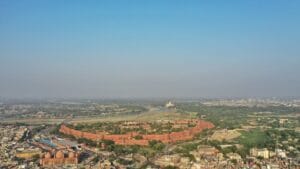
Agra’s story stretches back to antiquity, its name derived from “Agrabana” or “Agravana,” a forest described in the epic Mahabharata. The city stepped into the medieval spotlight in 1504, when Sultan Sikandar Lodi of the Delhi Sultanate reconstructed Agra and designated it his capital. Nestled on the banks of the Yamuna River, the city quickly became a center of power, drawing royalty, merchants, scholars, and artists — rising to prominence as a hub of Islamic scholarship in India.
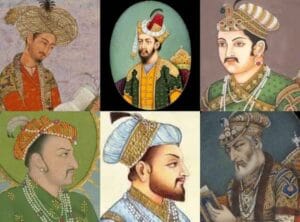
Following Sikandar Lodi’s death, his son Sultan Ibrahim Lodi ruled from Agra until his defeat by Babur at the Battle of Panipat in 1526. Babur, founder of the Mughal Empire, traced his lineage to both Timur and Genghis Khan. His successor, Emperor Humayun, briefly lost the city to Afghan ruler Sher Shah Suri before recapturing it in 1555-56. Under successive Mughal rulers — Akbar, Jahangir, and Shah Jahan — Agra flourished as one of medieval India’s most important cities, becoming an enduring symbol of grandeur throughout the Mughal Empire’s rule from 1526 to 1858.
The Mughal Builders of Agra
Emperor Babur crafted the first formal Persian garden along the Yamuna’s banks, the Aram Bagh. His grandson, Emperor Akbar, fortified the towering walls of Agra Fort and transformed the city into a hub for education, the arts, trade, and spirituality — while also founding the new township of Fatehpur Sikri nearby. Jahangir, Akbar’s son, had a deep passion for painting, architecture, and the natural world, commissioning the Tomb of Akbar and the Itmad-ud-Daulah Tomb, as well as adorning Agra Fort with new gardens. His son, Shah Jahan, gifted the city its most treasured monument — the Taj Mahal, built in memory of his wife Mumtaz Mahal.
Following the Mughal Empire’s decline, the Marathas took control of Agra in the late 18th century before ceding it to the British in the early 1800s, as the city’s political prominence gradually waned — though its cultural legacy endures, woven into its monuments, alleys, and cuisine to this day.
Agra Fort
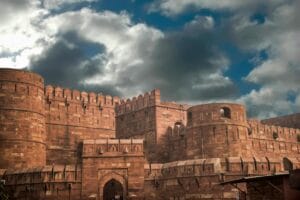
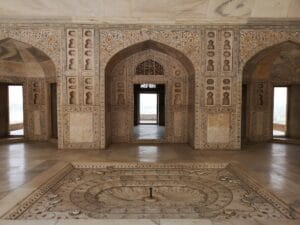
A sprawling UNESCO World Heritage Site spanning 380,000 square meters, Agra Fort became Akbar’s capital upon his arrival in 1558. Historian Abul Fazl recorded that the fort — originally a dilapidated brick structure called Badalgarh — was rebuilt by Akbar in red sandstone, with roughly 4,000 laborers working for eight years to complete it by 1573. It served as the Mughal capital until 1638, when the seat of government moved to Delhi.
Fatehpur Sikri: The City of Victory
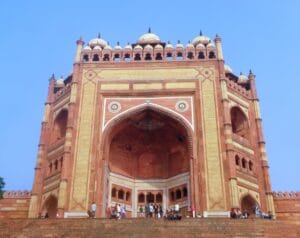
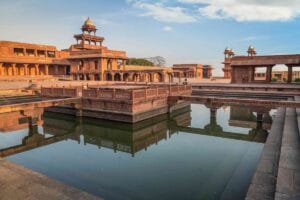
Just 40 kilometers from Agra, Fatehpur Sikri is a UNESCO World Heritage Site and one of the finest examples of Indo-Islamic architecture, established by Akbar as his capital for roughly a decade. According to legend, Akbar traveled to the village of Sikri to seek counsel from the Sufi saint Hazrat Shaikh Salim Chishti, who foretold the birth of an heir to the Mughal throne. When the prophecy came true, Akbar built his new capital here, including one of India’s largest mosques, three grand palaces, and the striking white marble tomb of Salim Chishti within the Jama Masjid courtyard.
The complex’s most famous structure is the Buland Darwaza, a 180-foot gateway inscribed with a profound message attributed to Jesus (Isa), son of Mary: “The world is a bridge, pass over it, but build no houses on it.” Verses from the Quran, carved in elegant Naskh script, further enrich the monument’s spiritual significance.
Sikandra: The Tomb of Akbar
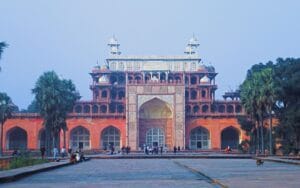
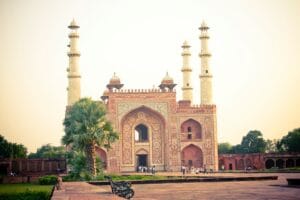
Sikandra stands as Emperor Akbar’s mausoleum — remarkably, Akbar himself chose the site, designed the layout, and oversaw construction during his own lifetime, complete with surrounding gardens. The tomb’s exquisite marble upper section was completed after his death by his son, Emperor Jahangir.
Itmad-ud-Daulah: The “Baby Taj”
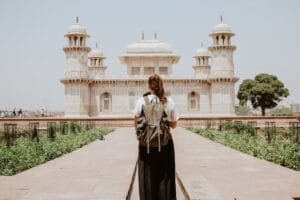
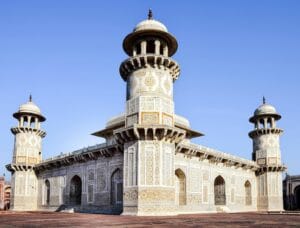
Built during Jahangir’s reign, the Itmad-ud-Daulah Tomb is regarded as one of the most exquisite Mughal tombs, enshrining the resting place of Mirza Ghiyas and Asmat Begum — parents of Empress Nur Jahan. Many historians believe this tomb directly inspired the design of the Taj Mahal, earning it the affectionate nickname “Baby Taj Mahal.
Chini Ka Rauza
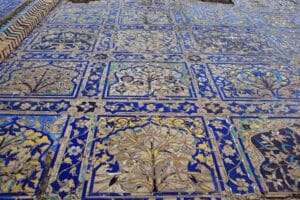
Dedicated to Mullah Shukrullah Shirazi, a Mughal courtier honored with the title Afzal Khan, Chini Ka Rauza is distinguished by its striking blue-glazed porcelain tilework — known locally as Chini Mitti — set amid meticulously kept gardens. The site stands as an early example of Persian artistic influence in Agra.
The Tomb of Mariam-uz-Zamani
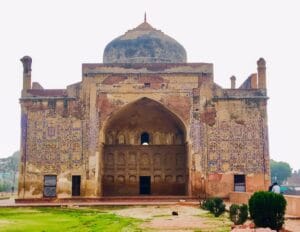
Often (though inaccurately) called “Jodha Bai’s Tomb,” this monument honors Akbar’s beloved wife, originally a Rajput princess named Heer Kunwari, who married Akbar in 1562 and was renamed Mariam-uz-Zamani Begum. She was the mother of Emperor Jahangir, who built this tomb near his father Akbar’s in her honor.
Jama Masjid, Agra
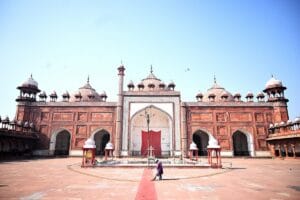
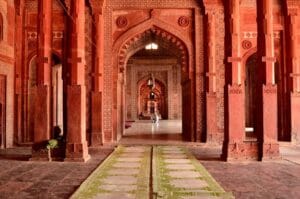
One of the largest mosques commissioned by the Mughals, Jama Masjid was built in 1648 by Jahanara Begum, daughter of Shah Jahan, and required around 5,000 workers to complete over six years — its rectangular open forecourt remains a striking example of Mughal religious architecture.
Aram Bagh & Mehtab Bagh
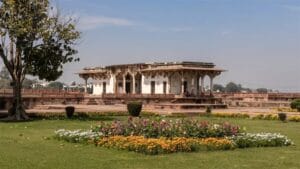
Envisioned by Emperor Babur and established in 1528, Aram Bagh is believed to have briefly housed Babur’s remains before they were transported to Kabul. Nearby, Mehtab Bagh — another creation attributed to Babur — offers a stunning, symmetrically aligned garden view directly across from the Taj Mahal, ideal for a peaceful sunset visit.
Living Heritage: Artisans & Cuisine
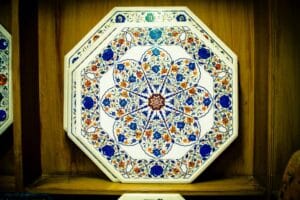
Agra’s tradition of skilled artisans remains extraordinary — generations of craftsmen have preserved techniques in marble carving, cutting, inlaying, and polishing, transforming raw stone into the intricate designs seen throughout the city today. Watching these artisans at work offers a genuinely immersive glimpse into living history.
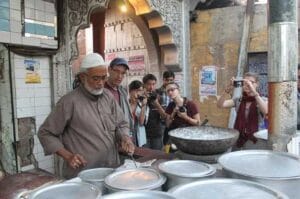
Agra’s cuisine reflects the same Mughal legacy. Mughlai dishes — rich, creamy meat gravies infused with dried fruits and aromatic spices — remain a hallmark of the city’s culinary identity, available across countless restaurants throughout Agra.
Frequently Asked Questions
Is it easy to find halal food in Agra?
Yes — Agra’s rich Mughlai culinary tradition means halal-certified dining is widely available throughout the city.
How far is Fatehpur Sikri from Agra?
Fatehpur Sikri is approximately 40 kilometers from Agra, making it an easy half-day or full-day excursion.
Is Agra part of the Golden Triangle tour?
Yes — Agra forms one corner of India’s iconic Golden Triangle alongside Delhi and Jaipur, making it easy to combine into a single itinerary.
What’s the best time to visit Agra?
October to March offers the most comfortable weather for sightseeing, particularly for exploring the Taj Mahal and outdoor monuments.
Discover more of India’s best Halal-friendly tourism and services with Halal Trip India — from Agra’s timeless Taj Mahal to the historic mosques of Delhi, the palaces of Jaipur, and the deeper history in our Islamic Heritage of India guide. Ready to experience Agra’s Mughal grandeur for yourself? Explore our Golden Triangle Tour and start planning your next Muslim-friendly journey across India.