
DESTINATION AGRA
Halal Travel Guide to Agra
Agra is home to three UNESCO World Heritage Sites — the Taj Mahal, Agra Fort, and Fatehpur Sikri — and sits at the heart of India’s Mughal history. For Muslim travellers, it is one of the most naturally accessible destinations in the country, with halal food widely available, mosques near every major attraction, and a deep Islamic heritage woven into the city’s architecture and culture.
What to See in Agra
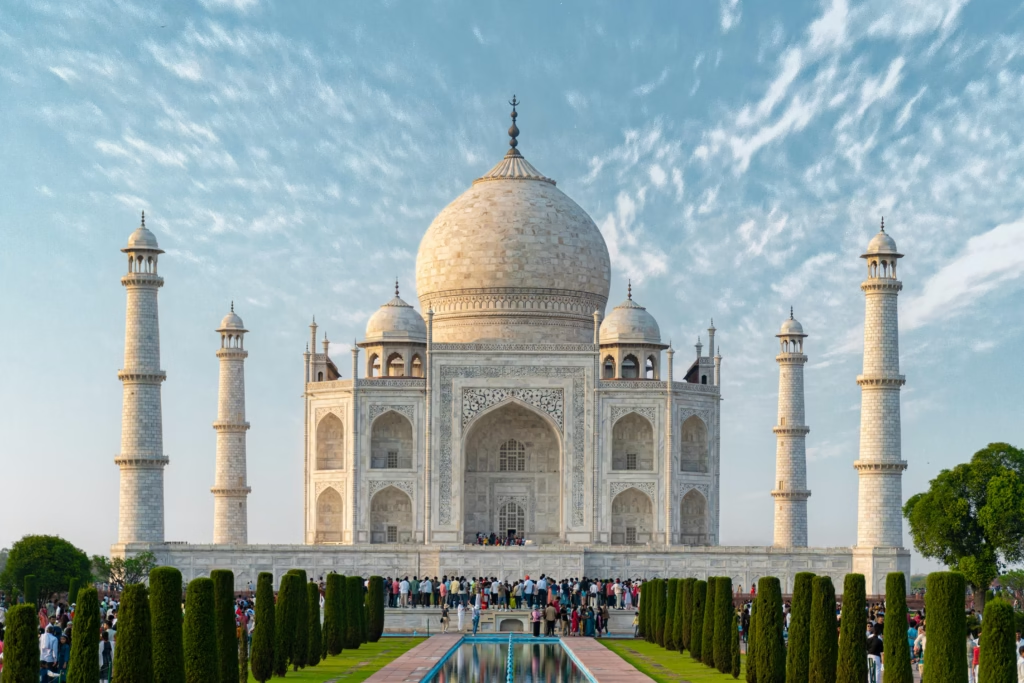
Taj Mahal
Built by Mughal Emperor Shah Jahan in memory of his wife Mumtaz Mahal, the Taj Mahal is one of the most recognised monuments in the world. The best time to visit is at sunrise, when crowds are smaller and the light is softest. The mosque within the Taj Mahal complex is an active place of worship — visitors are welcome to pray there. Plan at least two to three hours for the full site.
Visitor tip: The Taj Mahal is closed on Fridays to general visitors, but open to worshippers attending Jumu’ah prayers. Book your entry tickets online in advance to avoid queues.
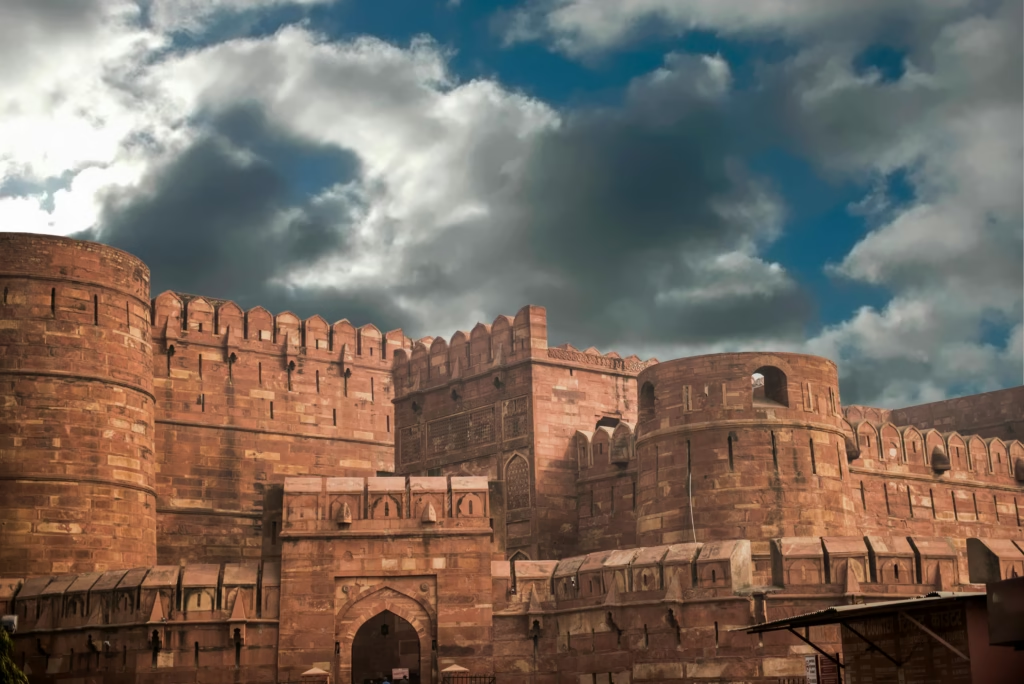
Agra Fort
A short distance from the Taj Mahal, Agra Fort is a massive Mughal fortification built by Emperor Akbar in 1565. Inside you will find palaces, audience halls, and mosques that trace the reigns of Akbar, Jahangir, and Shah Jahan. The fort offers a stunning view of the Taj Mahal from its eastern ramparts. Allow around two hours for a comfortable visit.
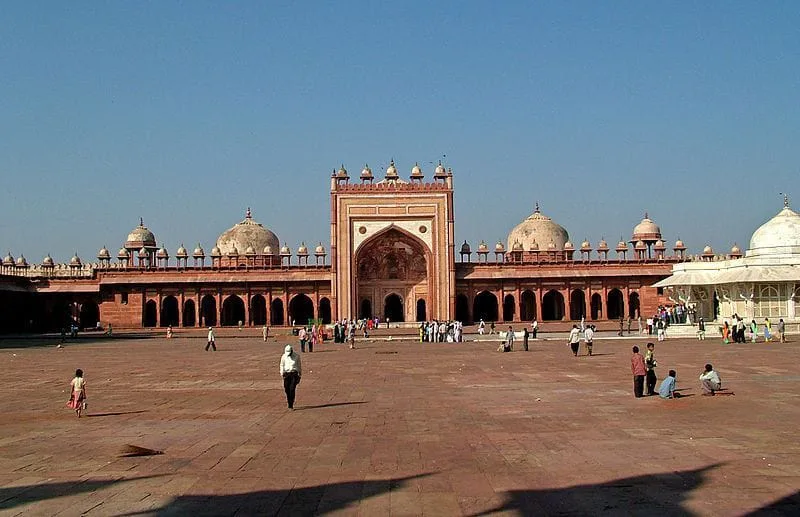
Fatehpur Sikri
Located 40 kilometres west of Agra, Fatehpur Sikri was the Mughal capital under Emperor Akbar. The site includes the grand Jama Masjid, the revered dargah of Hazrat Salim Chishti, and the iconic Buland Darwaza — one of the largest gateways in the world. It is a deeply significant site for Muslim travellers and a rewarding half-day trip from Agra.
Halal Food in Agra
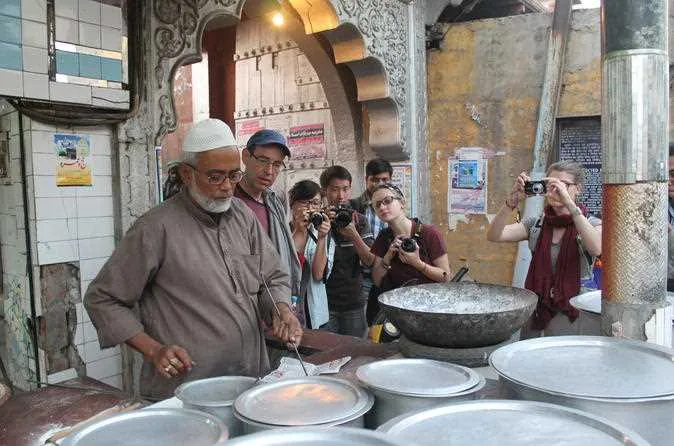
Agra has a large Muslim population and halal food is easy to find throughout the city. The area around the Taj Mahal and Jama Masjid has a high concentration of halal restaurants serving Mughlai cuisine — biryanis, kebabs, kormas, and fresh breads. Popular areas include the lanes around Taj Ganj and Sadar Bazaar. Street food from Muslim vendors around the old city is also widely available.
Mosques and Prayer Facilities
Prayer facilities are accessible throughout Agra. Key mosques near the main attractions include:
- Taj Mahal Mosque — inside the Taj Mahal complex, open to visitors for prayer
- Jama Masjid Agra — one of the largest mosques in the city, 5 minutes from the Taj Mahal
- Moti Masjid — located inside Agra Fort
- Jama Masjid, Fatehpur Sikri — one of the largest mosques in India
Most hotels in Agra catering to Muslim travellers provide prayer mats and Qibla direction on request.
Where to Stay in Agra
Agra has accommodation at every budget, from luxury five-star hotels with Taj Mahal views to comfortable mid-range stays near the fort and bazaars. The Taj Ganj area is the most popular neighbourhood for Taj Mahal visitors. Sadar Bazaar offers more options for mid-range and budget travellers. When booking, look for hotels that offer halal meal options and can accommodate prayer schedules.
Practical Tips for Muslim Travellers
- The Taj Mahal is closed on Fridays to tourists but open for Jumu’ah prayers
- Dress modestly at religious sites — shoulders and knees covered for men and women
- Remove shoes before entering all mosques and the Taj Mahal complex
- Agra is best visited between October and March when the weather is cooler
- Book Taj Mahal entry tickets online in advance to avoid queues at the gate
- Hire a local guide to get the most out of the Mughal history at each site
Frequently Asked Questions
Is Agra suitable for Muslim families?
Yes. Agra is one of the most welcoming cities in India for Muslim families. Halal food is widely available, mosques are easy to find near all major sites, and the city’s Mughal heritage gives it a culturally familiar atmosphere for many Muslim travellers.
How many days do I need in Agra?
Two days is comfortable for most visitors — one day for the Taj Mahal and Agra Fort, and a half day for Fatehpur Sikri. If you are combining Agra with Delhi and Jaipur on the Golden Triangle route, allow two full days in Agra.
Can I pray at the Taj Mahal?
Yes. The mosque inside the Taj Mahal complex is an active place of worship and visitors are welcome to pray there. On Fridays, the complex is closed to tourists but open to worshippers attending Jumu’ah prayers.
What is the best time to visit Agra?
October to March is the ideal time to visit — temperatures are comfortable and the skies are clear. Avoid May to July when temperatures regularly exceed 40°C. The Taj Mahal looks particularly beautiful on full moon nights, and special evening viewing tickets are available on those dates.
Plan Your Agra Trip with Halal Trip India
We offer a range of Agra tour packages designed for Muslim travellers, including the Golden Triangle (Delhi–Agra–Jaipur), Mughal heritage tours, Kashmir combined tours, and family and honeymoon packages. All itineraries are planned around halal dining, prayer times, and Muslim-friendly accommodation. Contact us to start planning your visit.
- Email: travel@halaltripindia.com
- Phone: +91 9354984761
- Website: www.halaltripindia.com