Jaipur: India’s UNESCO Heritage Pink City
Welcome to our deeper dive into Jaipur’s heritage — beyond the standard sightseeing checklist covered in our full Jaipur Halal travel guide, this guide explores the fascinating stories behind the Pink City’s most iconic monuments. Because Halal-friendly travel in Jaipur is genuinely easy — halal food, mosques, and Muslim-friendly hotels are all close at hand — Muslim travelers and families can focus entirely on soaking in centuries of royal history.
The Founding of a Planned City
In 2019, Jaipur’s walled city was inscribed as a UNESCO World Heritage Site — only the second Indian city, after Ahmedabad, to receive this distinction — recognized for its remarkable grid-based town planning that blends Hindu, Mughal, and Western architectural influences. Jaipur, the gateway to Rajasthan, was India’s first planned city, founded in 1727 by Maharaja Sawai Jai Singh II, a celebrated mathematician and astronomer. Every detail was considered before the foundation stone was laid, from the orientation of the city gates to the very layout of its markets. Because Jaipur is part of the Golden Triangle circuit alongside Delhi and Agra, it remains one of India’s most visited heritage destinations, easily combined into a longer North India itinerary.
Why Is Jaipur Called the Pink City?
In 1876, Maharaja Sawai Ram Singh II painted the entire city terracotta pink to welcome the Prince of Wales — a color meant to symbolize hospitality and soften the harsh desert sunlight. In addition, the tradition has continued ever since, with shopkeepers and households maintaining the now-famous pink color throughout the old walled city, giving Jaipur its enduring nickname.
Hawa Mahal: The Palace of Winds
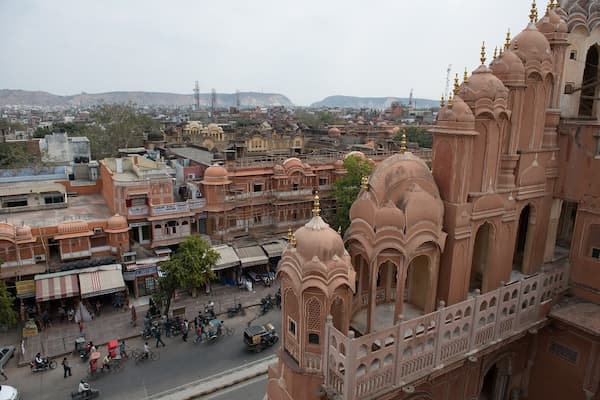
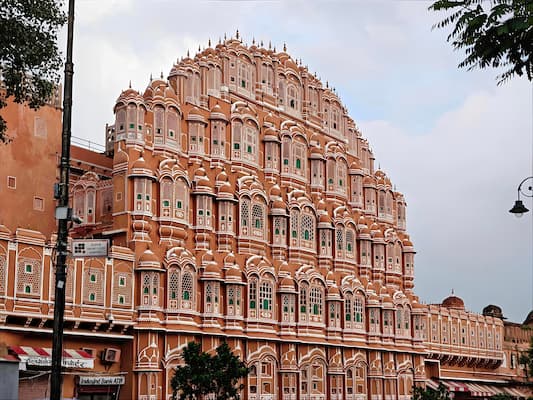
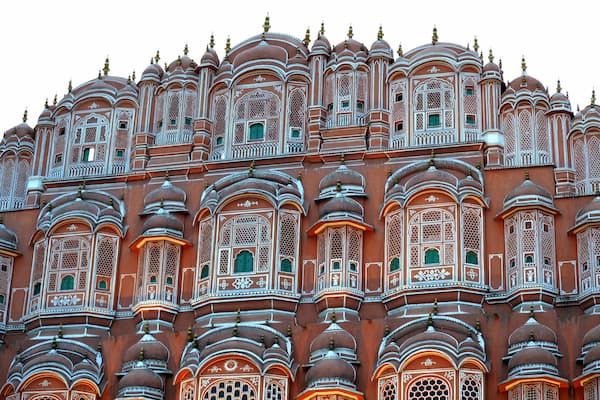
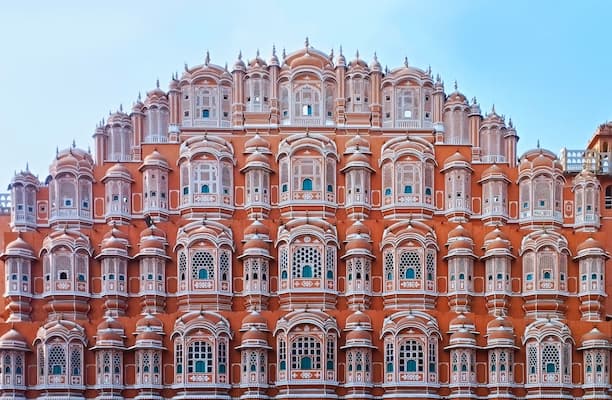
Lal Chand Ustad designed Hawa Mahal for poet-king Sawai Pratap Singh. Today it stands as Jaipur’s most iconic landmark and a must-see stop for anyone exploring Muslim-friendly travel in Jaipur. Its five-story honeycomb facade, dotted with 953 intricately latticed windows called jharokhas, was originally built so royal women could observe street festivities below while remaining unseen, in keeping with the purdah tradition. Because the palace rises nearly 87 feet without any conventional staircase — visitors instead climb gentle ramps designed for royal palanquins — exploring its upper floors feels like stepping directly into 18th-century royal life.
For example, most visitors don’t realize what they’re seeing from the street is actually the back of the palace, with the true grand entrance located on the opposite side within the City Palace complex — a fascinating detail that surprises first-time travelers. In addition, the pink sandstone structure is best photographed in the early morning light, when the honeycomb pattern casts striking shadows across the busy market street below.
City Palace: The Living Royal Residence
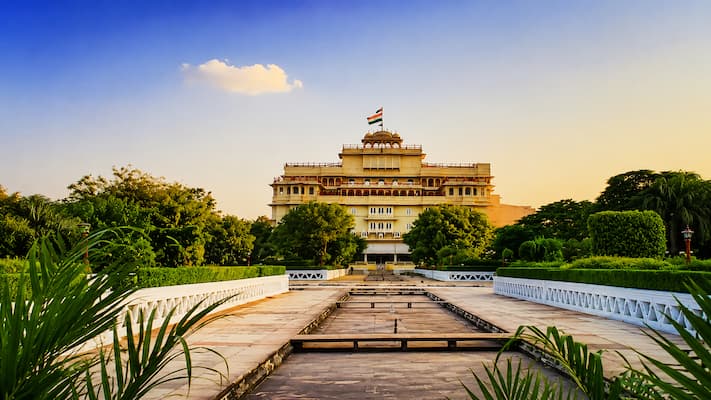
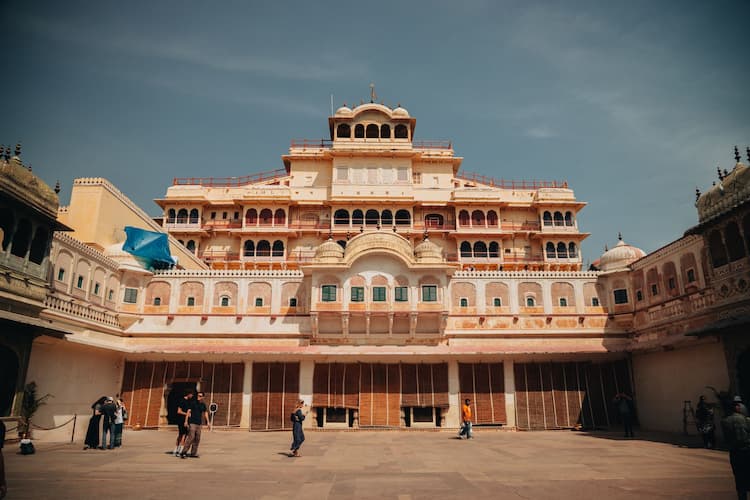
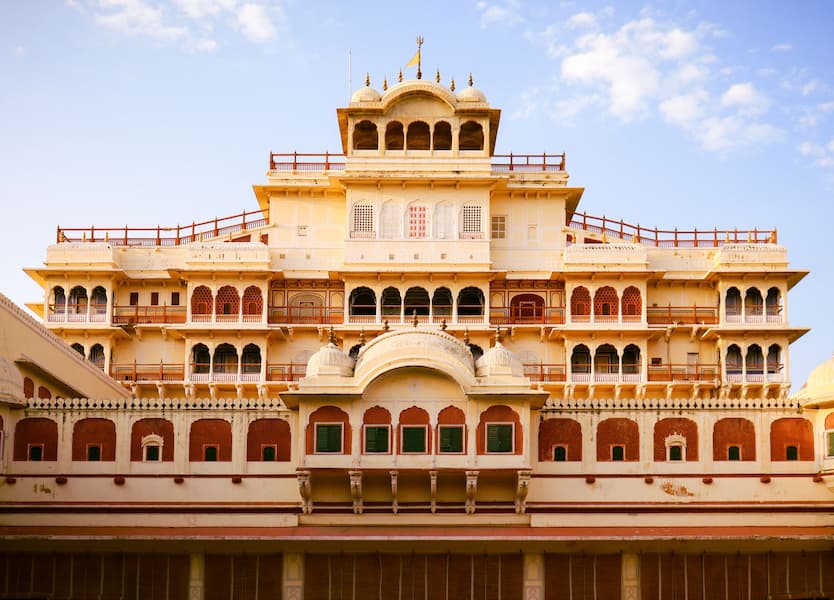
Sawai Jai Singh II built City Palace starting in the early 1700s. Still home to Jaipur’s royal family today, its courtyards and pavilions reflect the founder’s ambitious architectural vision for his new capital. Because the palace complex blends Rajput, Mughal, and European design elements seamlessly, it stands as a genuine architectural time capsule spanning nearly three centuries of Jaipur’s royal history. In addition to its opulent halls and museum galleries showcasing royal weaponry, textiles, and manuscripts, the palace’s Chandra Mahal — a seven-story structure still partially used as a royal residence — offers a rare glimpse into how Jaipur’s royal family lives even today. For Muslim families visiting Jaipur, City Palace offers a genuinely educational, family-friendly stop, with guided tours widely available in multiple languages.
Jantar Mantar: A Masterpiece of Astronomical Genius
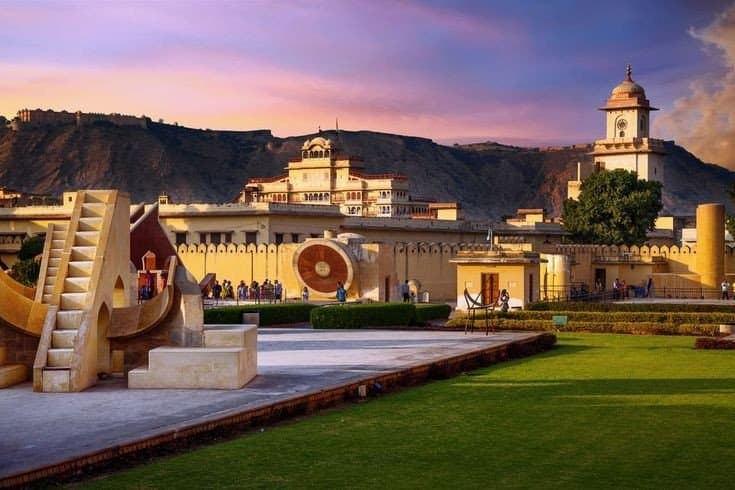
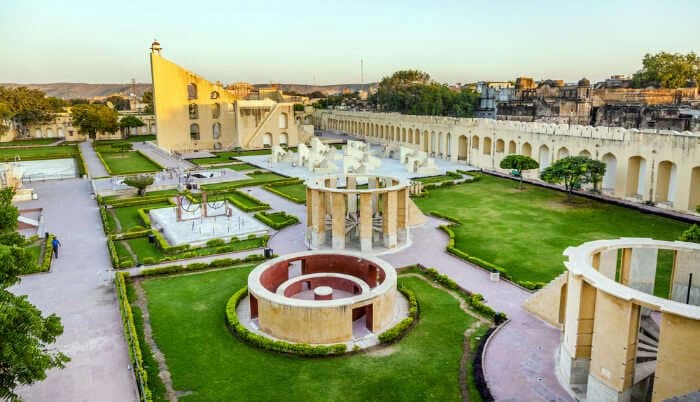
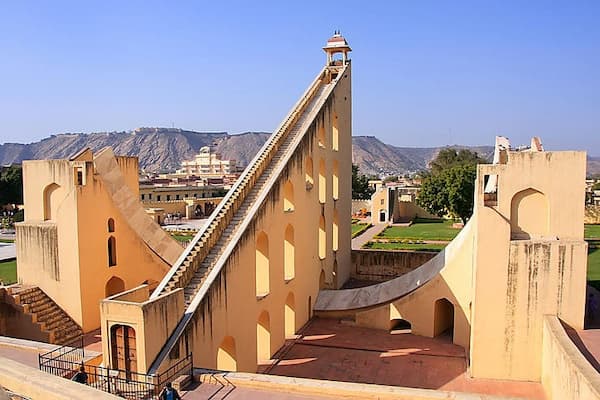
Just beside City Palace stands Jantar Mantar, a UNESCO World Heritage Site and one of the most remarkable astronomical observatories ever built. Because Sawai Jai Singh II was as passionate about astronomy as he was about architecture, he commissioned this extraordinary complex of nearly 20 masonry instruments between 1727 and 1734, designed to measure time, track celestial movements, and predict eclipses with astonishing precision using nothing but the naked eye.
The observatory’s crown jewel is the Vrihat Samrat Yantra, the world’s largest stone sundial, standing an impressive 27 meters tall and capable of measuring local time to an accuracy of just two seconds. For example, other instruments within the complex, such as the Jai Prakash Yantra and the Rama Yantra, allowed astronomers to calculate the position of stars, planets, and zodiac signs — knowledge that guided everything from royal decision-making to agricultural planning across the kingdom.
In addition to its scientific brilliance, Jantar Mantar remains a functioning observatory today, with its instruments still calibrated accurately enough to tell time. Because it represents such a rare fusion of scientific innovation and architectural artistry, UNESCO recognized it in 2010 as the most significant, comprehensive, and best-preserved of India’s historic observatories — a genuinely fascinating stop for curious travelers of all ages, and a rewarding contrast to Jaipur’s more famous forts and palaces.
Amber Fort: Rajput-Mughal Grandeur
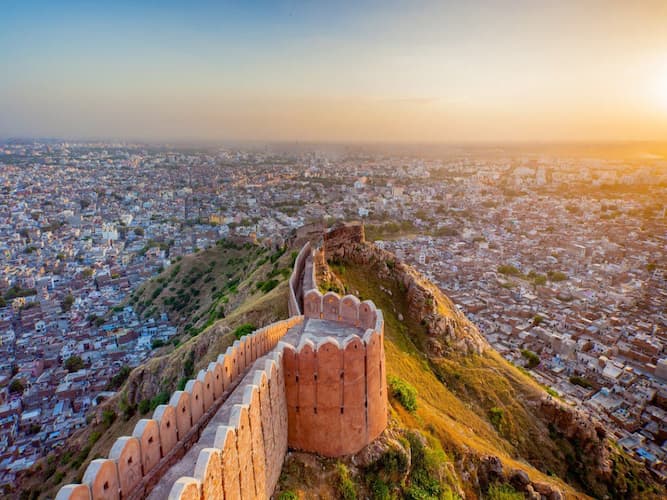
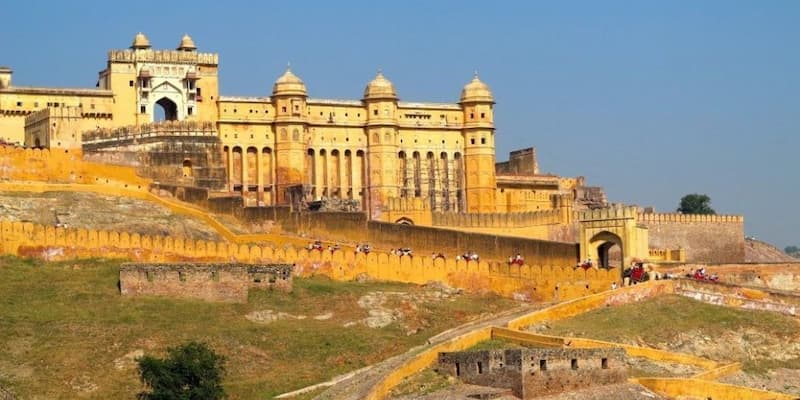
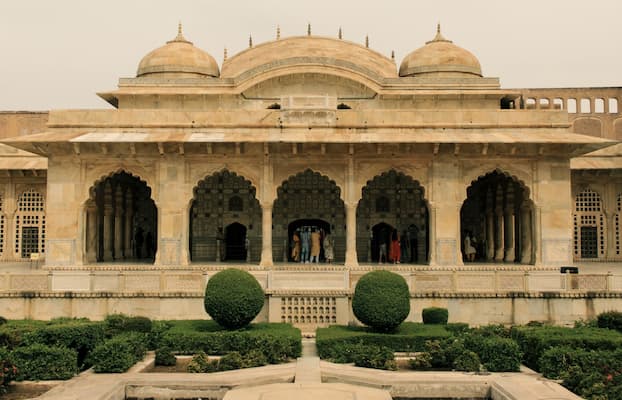
Raja Man Singh I constructed Amber Fort in 1592, and Mirza Raja Jai Singh completed it. Today this UNESCO World Heritage Site sits perched on a hill 11 km from the city center. Because its design blends red sandstone strength with white marble elegance, the fort feels like an inner paradise hidden behind a rugged exterior, with Maota Lake providing a breathtaking backdrop below. Inside, the Diwan-e-Aam (Hall of Public Audience) once served as the king’s court, while the Diwan-e-Khas (Hall of Private Audience) hosted strategic meetings with generals and allied rulers — functioning much like a royal parliament chamber.
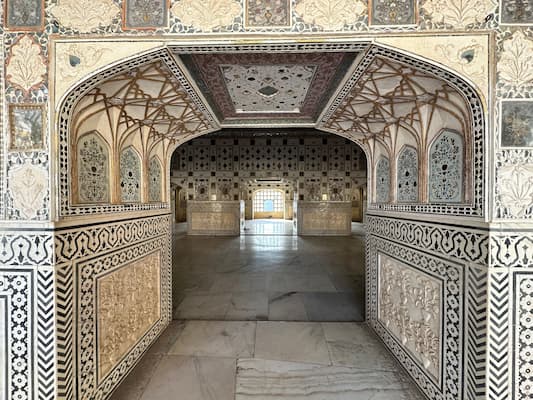
The Sheesh Mahal (Mirror Palace) remains the fort’s most breathtaking chamber, its ceiling inlaid with thousands of tiny mirrors that once sparkled like stars under candlelight, a design so effective that even a single candle could illuminate the entire hall. For example, many visitors choose to arrive by jeep or on foot rather than elephant, given growing awareness around animal welfare, while still enjoying the same spectacular hilltop views and Rajput-Mughal architectural fusion that makes Amber Fort one of Rajasthan’s most visited monuments.
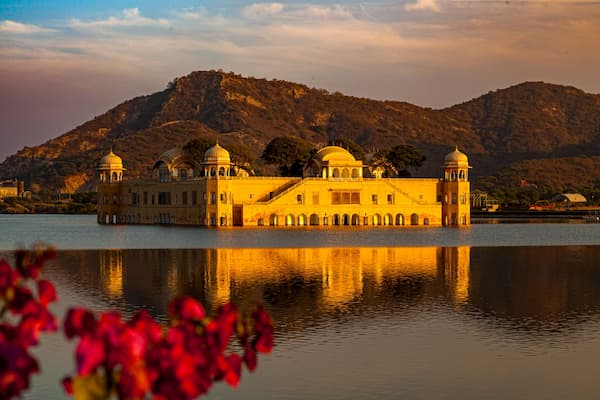
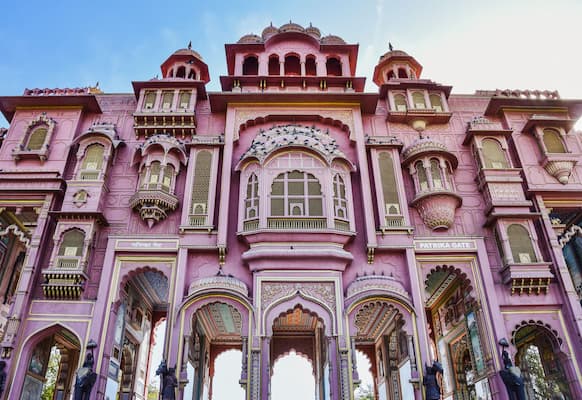
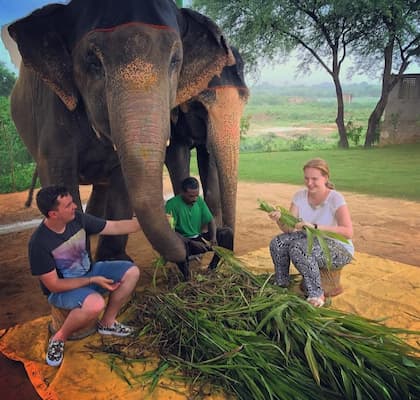
Jal Mahal, Patrika Gate & Elephant Village
Jal Mahal, the “Water Palace,” appears to float in the middle of Man Sagar Lake, its five-story structure rising just one floor above the water’s surface while the remaining four floors sit submerged beneath it. Because the palace once served as a royal shooting lodge for duck hunting expeditions, its unique architecture blends Rajput and Mughal styles in a way rarely seen elsewhere in Jaipur. Today it stands as a beautiful, protected photo stop, especially magical in winter when thousands of migratory birds fill the surrounding lake and reflect against the palace’s sandstone walls at sunset.
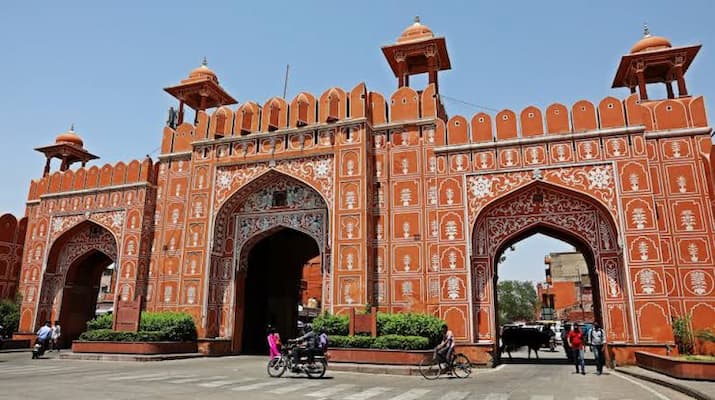
Patrika Gate, the city’s southern gateway, celebrates Rajasthan’s diverse art and culture in one striking structure, its nine ornate arches representing the nine districts of old Jaipur, each painted in vivid, symbolic colors and patterns. For example, the gate’s intricate ceiling murals and pillars showcase traditional Rajasthani motifs, folk art, and regional architectural styles from Sriganganagar to Banswara, making it one of the most Instagram-worthy spots in the city. Because of its growing popularity, it’s best photographed early in the morning to avoid the crowds that gather later in the day.
Families will also enjoy Elephant Village, located about 15 minutes from the main city, where visitors can feed, bathe, and even ride elephants in a fun, hands-on experience. In addition to these interactive activities, the village offers a genuine opportunity to learn about elephant care and conservation directly from their dedicated keepers — a meaningful, ethical alternative to traditional elephant rides, and a genuine highlight for Muslim families traveling with children.
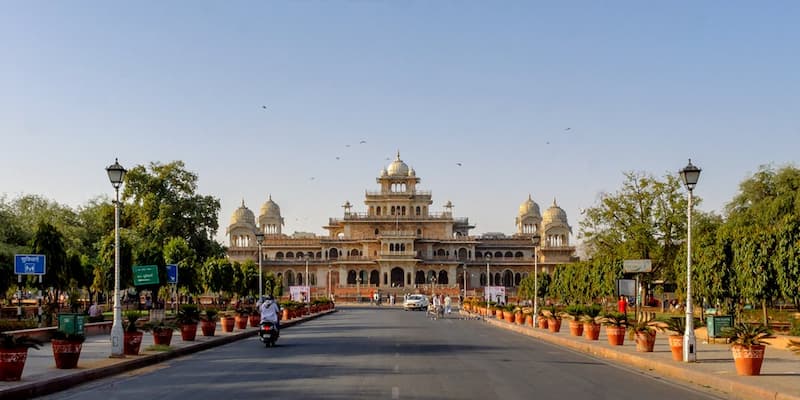
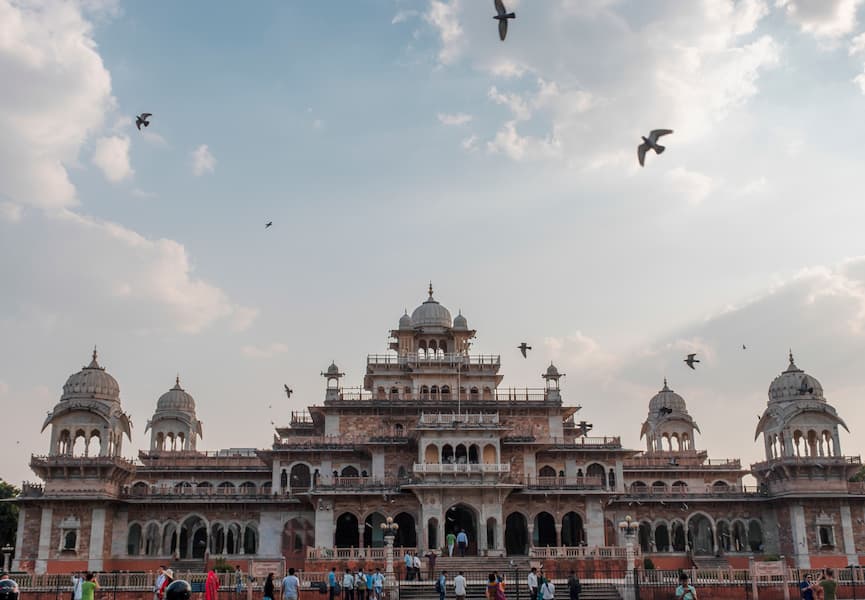
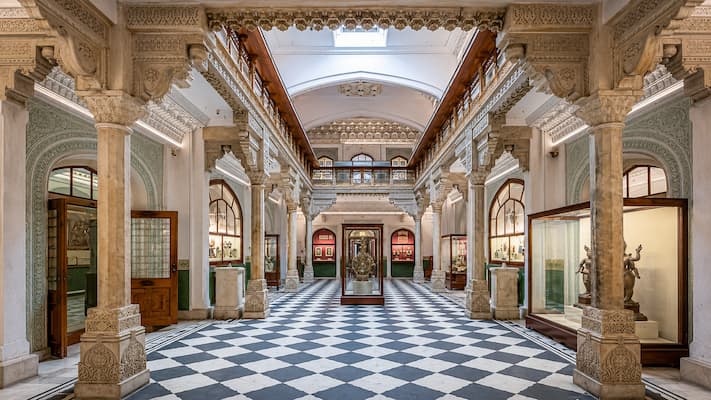
Albert Hall Museum & the Egyptian Mummy
Colonel Sir Swinton Jacob designed Albert Hall Museum in 1876 in the Indo-Saracenic style echoing London’s Victoria and Albert Museum. The museum houses thousands of rare historical artifacts across its grand courtyards and arched galleries. Because it was originally built to welcome King Edward VII during his visit to India as Prince of Wales, its architecture itself tells a story of colonial-era grandeur, blending Rajput, Mughal, and Gothic influences into one striking structure. In addition to its impressive collection of miniature paintings, carpets, and metalwork, the museum’s galleries showcase artifacts spanning centuries of Rajasthani art and craftsmanship.
Its most famous exhibit, however, is an Egyptian mummy named Tutu, a 2,300-year-old priestess dating back to Egypt’s Ptolemaic period, discovered in a pyramid within the ancient city of Panopolis. For example, this rare artifact was reportedly saved from being lost at sea during transport, making its presence in Jaipur’s Albert Hall Museum an unlikely but genuinely fascinating piece of history for visitors to encounter thousands of miles from Egypt.
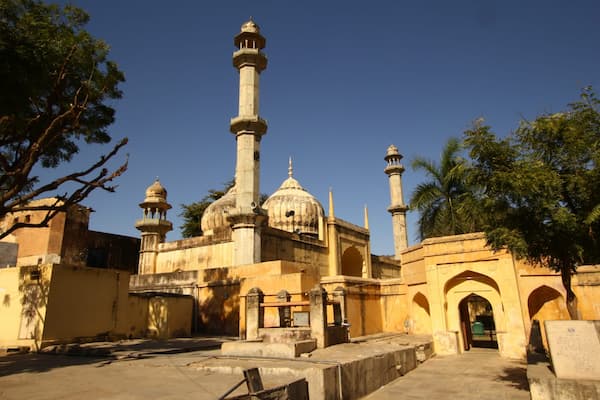
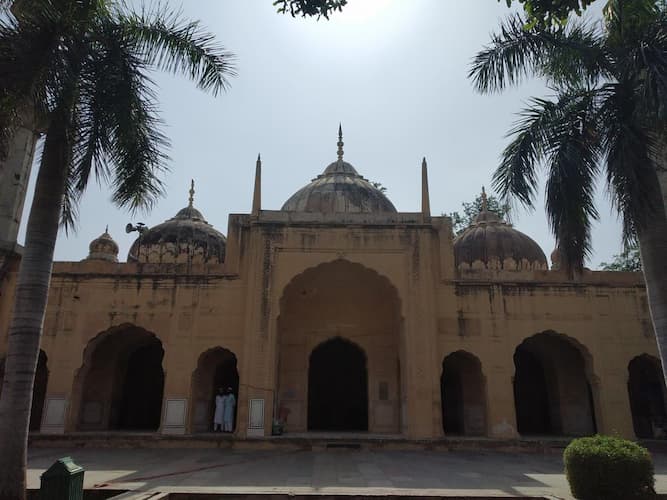
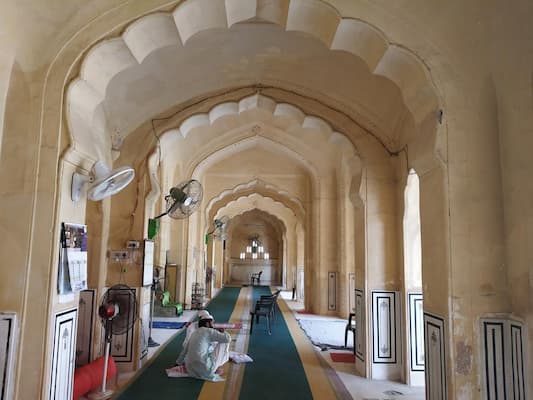
Jama Masjid: A Legacy of Mughal Patronage
Also known as Akbari Masjid, this historic mosque near Amer stands as a genuine example of Indo-Islamic architecture, built on the order of Mughal Emperor Akbar by Bharmal, the king of Amber, in 1569. A Persian inscription beside the central arch still records this royal commission today, making it a meaningful stop for Muslim travelers interested in Rajasthan’s Islamic heritage.
Vibrant Streets & Traditional Markets of Jaipur
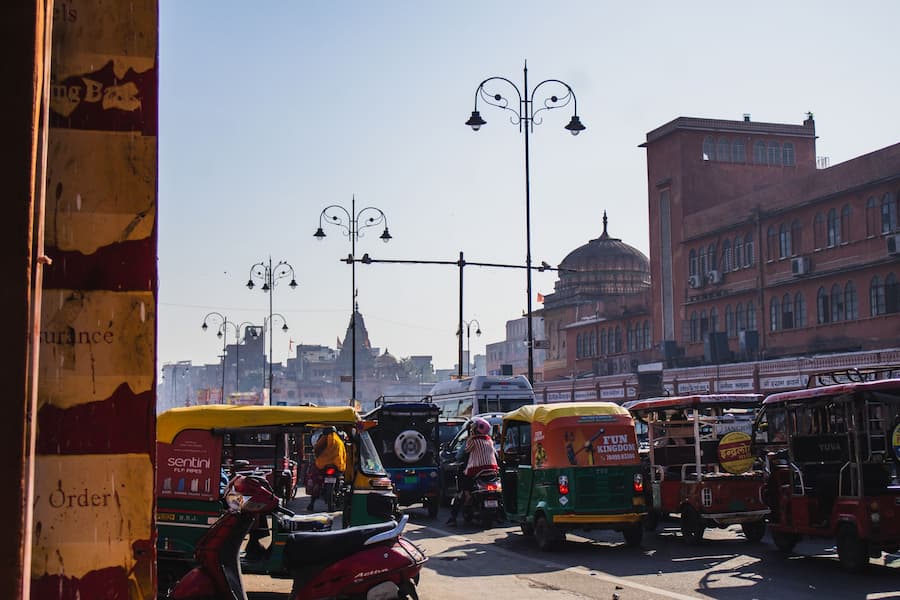
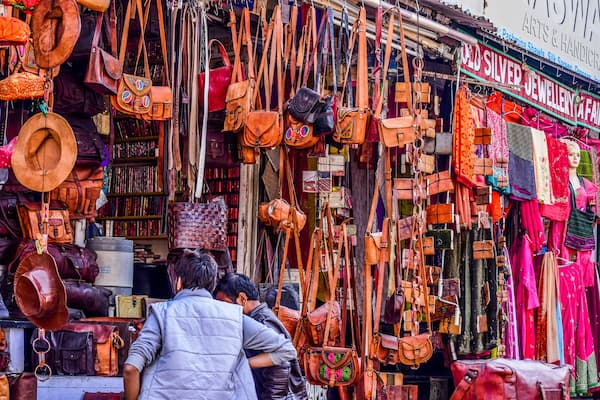
Beyond its palaces and forts, the true pulse of Jaipur beats through its bustling bazaars and colorful old-city streets. Because the walled city was originally designed with dedicated market lanes for specific trades, each bazaar in Jaipur still specializes in something distinct — Johari Bazaar dazzles with gemstones and traditional Rajasthani jewelry, Bapu Bazaar overflows with vibrant textiles, juttis (traditional footwear), and block-printed fabrics, while Tripolia Bazaar remains the go-to destination for intricately crafted lac bangles and metal handicrafts.
For example, wandering through Chandpole Bazaar offers a genuinely immersive sensory experience — the aroma of fresh spices mingling with the sound of artisans hammering brass and copper into ornate designs, a tradition passed down through generations of local craftsmen. In addition to shopping, these market streets themselves are a visual spectacle, with pink sandstone facades, ornately carved balconies, and narrow lanes buzzing with cycle-rickshaws, street food vendors, and the everyday rhythm of local life.
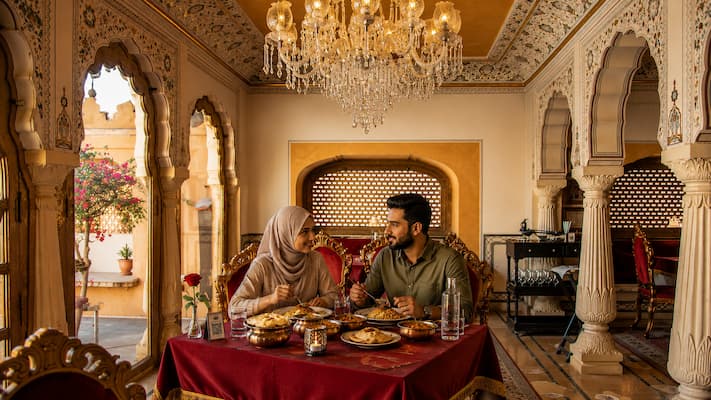
Because Muslim travelers visiting Jaipur will find these market areas genuinely welcoming, halal street food stalls serving kebabs, biryani, and fresh juices are easy to find woven throughout the bazaars, making an evening stroll through the old city just as memorable as any monument on the itinerary.
Muslim-Friendly Travel in Jaipur
Muslim-friendly travel in Jaipur is genuinely comfortable — halal-certified restaurants, welcoming hotels, and easily accessible mosques are found throughout the city. Whether you’re visiting solo, as a couple, or with the whole family, Jaipur’s blend of history and hospitality makes it one of Rajasthan’s most rewarding Halal-friendly destinations.
Continue Your North India Journey
Jaipur pairs perfectly with the rest of India’s Islamic heritage circuit. Combine your trip with the historic mosques of Delhi, the timeless Taj Mahal in Agra, or explore the wider Rajasthan circuit through Jodhpur’s Blue City, Udaipur’s romantic lakes, Jaisalmer’s golden desert forts, Ranthambore’s wildlife safaris, and the spiritual sanctuary of Ajmer Sharif.
Frequently Asked Questions
Is Jaipur easy for Muslim-friendly travel?
Yes — halal food, mosques, and Muslim-friendly hotels are all readily available throughout Jaipur, making it a comfortable destination for families and solo travelers alike.
Why is Jaipur called the Pink City?
The city was painted terracotta pink in 1876 to welcome the Prince of Wales, and the tradition has continued ever since.
Is Jaipur good for family travel?
Yes — attractions like Elephant Village, Jal Mahal, and Albert Hall Museum offer genuinely engaging experiences for children and families.
What’s the best time to visit Jaipur?
October to March offers the most comfortable weather for exploring forts and palaces.
Discover more of India’s best Halal-friendly tourism and services with Halal Trip India — from Jaipur’s royal heritage to the Islamic Heritage of India, or browse our Halal holiday packages to start planning your next Muslim-friendly journey across India.