
Blog
Kerala’s Islamic Heritage: A Story of Ancient Mosques and Faith
Welcome to our guide to Kerala Islamic heritage — a story that is one of the oldest and most beautiful in the world. Long before most countries had even heard of Islam, traders from Arabia were already sailing to Kerala’s shores. This simple beginning grew into something extraordinary — a land dotted with mosques over a thousand years old, each one holding a piece of history that few people know about. This is the story of Kerala’s Islamic heritage, told through its ancient mosques, its legendary king, and the faith that has thrived here for over 1,400 years.
How Islam First Arrived in Kerala
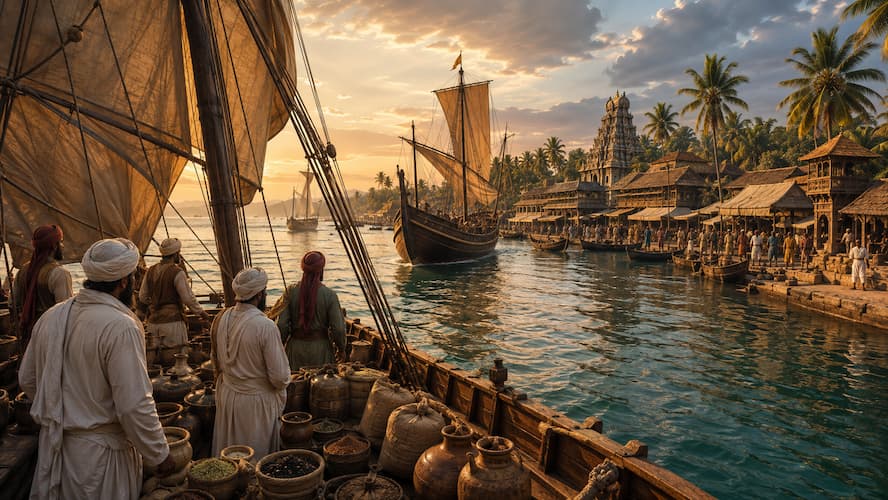
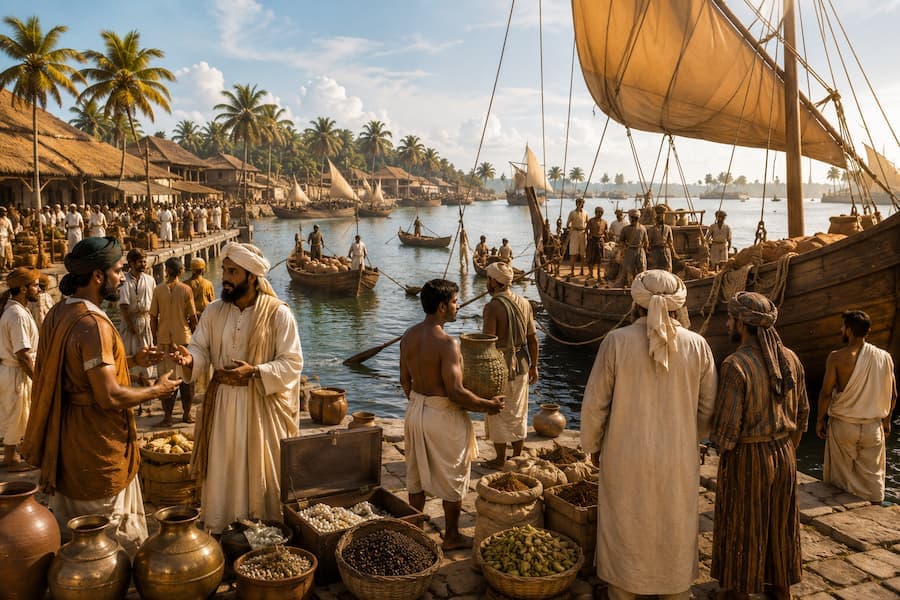
Long before Islam arrived in the Indian subcontinent, Arab traders were sailing to Kerala. They came for spices — pepper, cardamom, and cinnamon — and they used the Malabar Coast as their main stop. As early as the 1st century AD, a Roman historian named Pliny the Elder wrote about ships sailing from Arabia to Muziris, a port near today’s Kodungallur, taking about 40 days to arrive. These early trade routes built strong friendships between Arabia and Kerala — friendships that would soon shape the earliest chapters of Kerala Islamic heritage.
When Islam began to arrive, these same Arab traders carried their new faith with them to Kerala’s shores. Slowly, Muslim communities grew along the coast, and they brought new customs, new words, and new ways of building that blended beautifully with Kerala’s own traditions.
The Legend of King Cheraman Perumal
One of the most remarkable stories in Kerala Islamic heritage happened right here in Kerala. According to legend, King Cheraman Perumal was walking with his queen one night when they saw something incredible in the sky — the moon appeared to split in two. Confused and amazed, the king asked visiting Arab merchants what this meant. Their answer moved him so deeply that he decided to travel all the way to Mecca to learn more.
There, the king met Prophet Muhammad himself and accepted Islam. The Prophet gave him a new name — Tajuddin, meaning “The Crown of Faith.” Sadly, the king passed away on his journey home and was buried in Salalah, Oman. But before he died, he wrote a letter to his people back in Kerala, asking them to welcome Islam and follow the teachings of a man named Hazrat Malik Deenar. This remarkable story is recorded in old historical texts, including the 9th-century Al-Tabari’s Firdaws al Hikma.
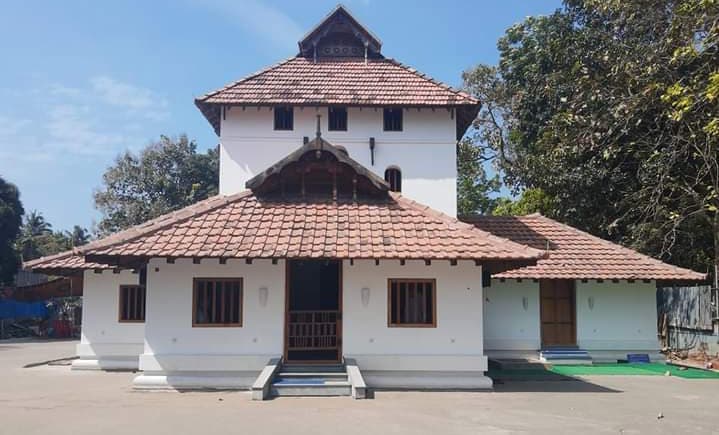
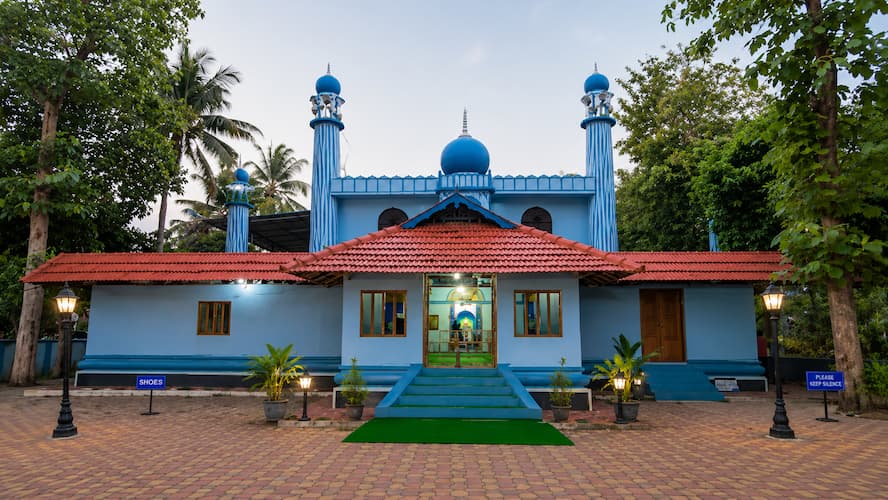
Cheraman Juma Mosque: The First Mosque in India
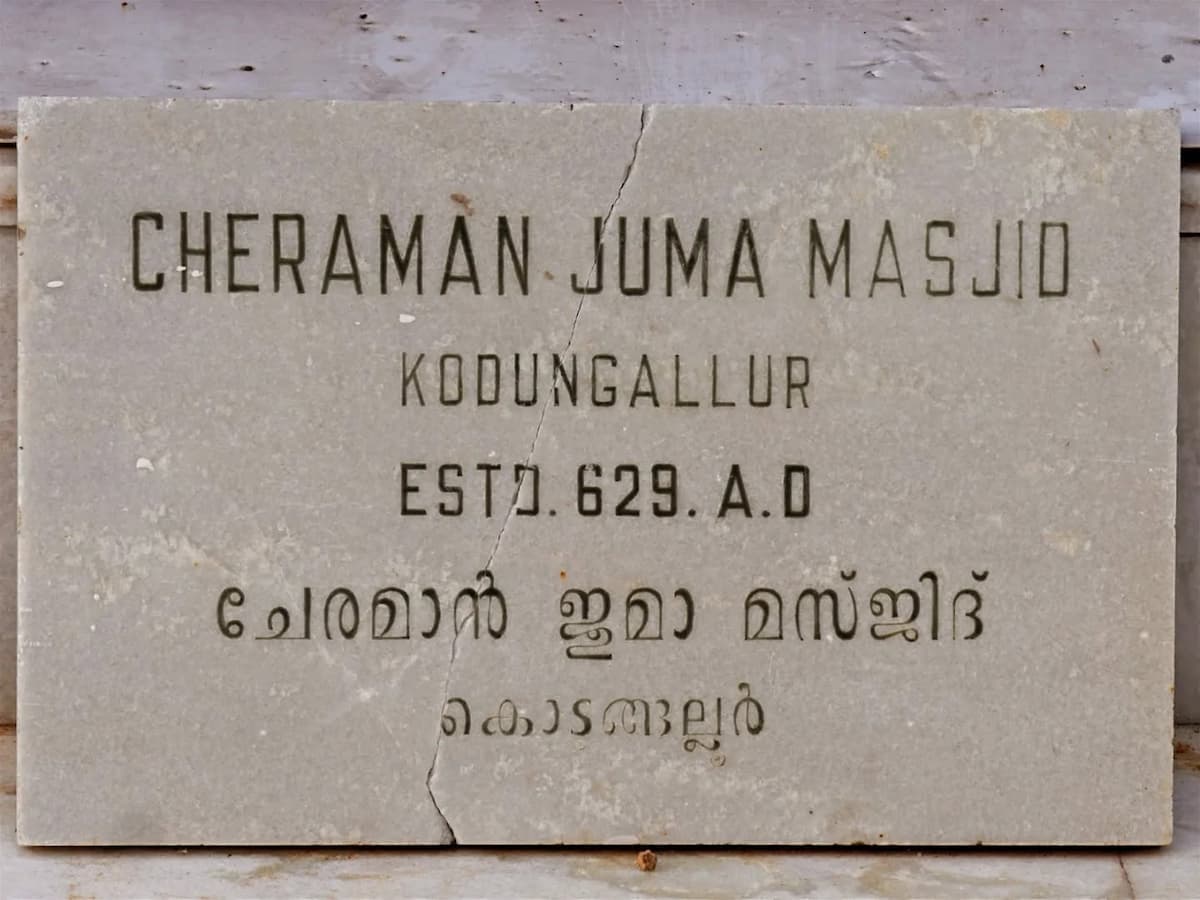
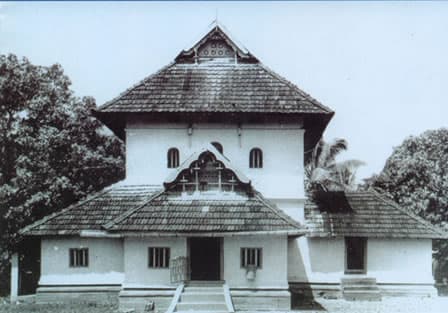
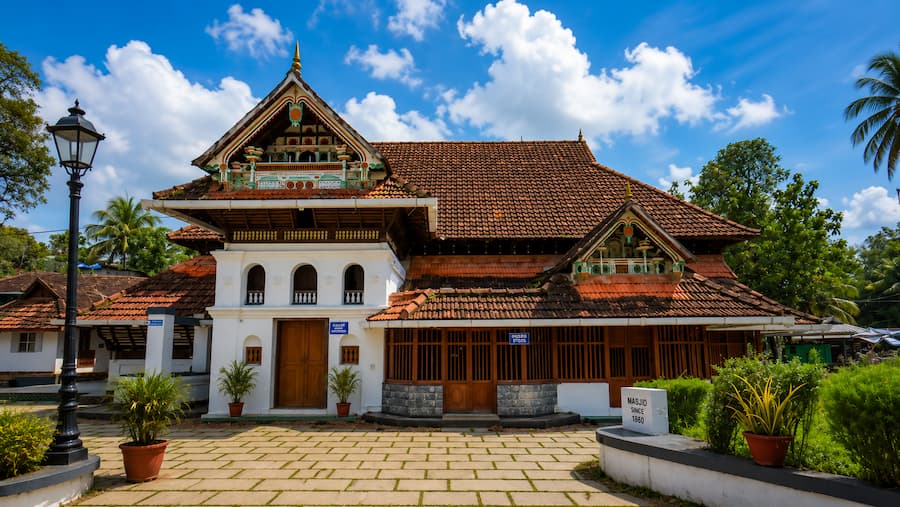
Following the king’s wishes, Hazrat Malik Deenar built the Cheraman Juma Mosque in Kodungallur in 629 CE — during the actual lifetime of Prophet Muhammad. This makes it one of the oldest mosques in the entire world, and it’s widely believed to be the very first mosque built in the Indian subcontinent. Even today, Muslim travelers from around the world make a special journey here, drawn by this remarkable piece of Islamic history hiding in a quiet corner of Kerala.
Over the centuries, the mosque has been rebuilt and changed many times, blending Kerala’s own traditional building style with influences from the Middle East. Its design tells a story all on its own — a beautiful mix of local craftsmanship and Arab architectural roots, found nowhere else quite like this. This unique fusion is what makes the mosque such a treasured example of Kerala Islamic heritage and Indo-Islamic architecture in South India.
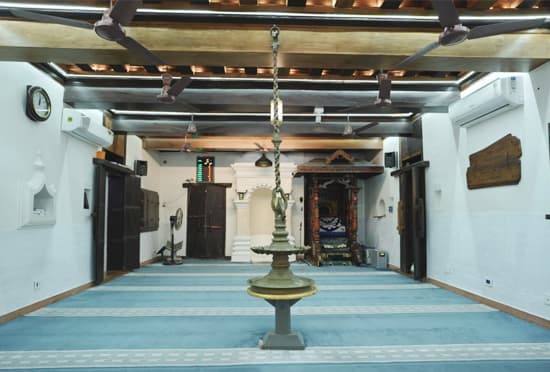
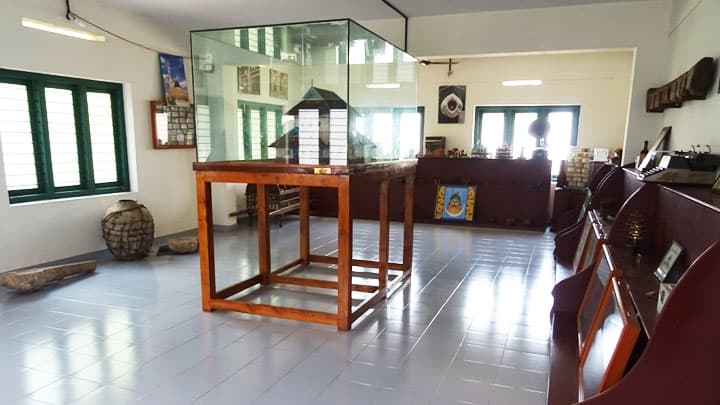
Today, visitors can explore the mosque complex, which also houses Kerala’s first Islamic Heritage Museum. Inside, you’ll find old photographs, a thousand-year-old oil lamp still carefully preserved, intricate wood carvings, and a small model of the mosque — each piece telling this incredible story to everyone who visits. For history lovers and Muslim travelers alike, this museum offers a rare, up-close look at how Islam first took root in India.
A visit to the Cheraman Juma Mosque is more than sightseeing — it’s a chance to walk through nearly 1,400 years of living history. Explore more of this remarkable journey in our full Islamic Heritage of India guide, or plan your own halal-friendly trip to experience this historic mosque firsthand.
More Ancient Mosques in Kerala Islamic Heritage
Kerala’s Islamic story doesn’t end with just one mosque. Hazrat Malik Deenar is credited with founding several historic mosques across the region, in places like Kollam, Madayi, Mangalore, Kasaragod, and Kannur — making him one of the most important figures in South Indian Islamic history. According to old historical texts, including the Qissat Shakarwati Farmad, these mosques were among the very first built anywhere in India, spreading Islam gently along the entire Malabar Coast rather than through conquest. Today, these ancient mosques remain living pieces of history, still standing as places of worship centuries after they were first built — a genuine testament to how deeply Kerala Islamic heritage took root in the region’s culture and daily life.
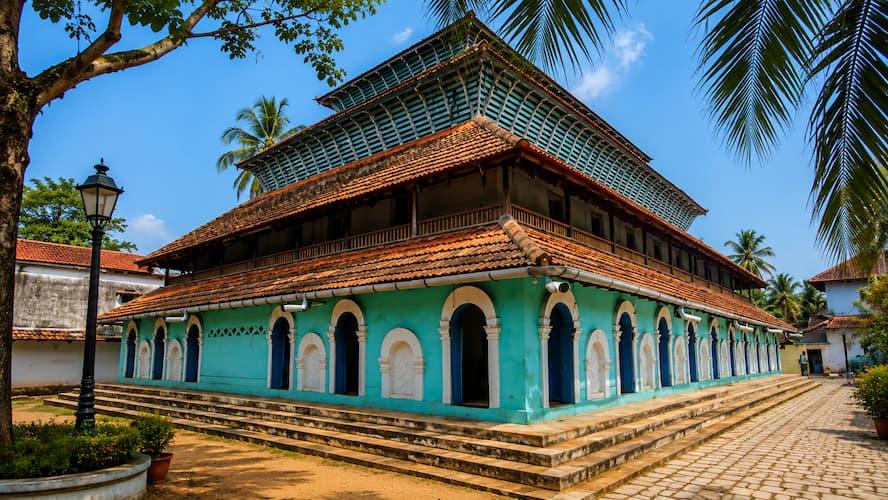
In Kottayam, along the banks of the Meenachil River, sits the Thazhathangadi Juma Masjid — over 1,000 years old, with a hidden passageway, a water tank carved from a single stone, and wooden carvings so detailed they look more like art than architecture.
In Calicut, the Mishkal Mosque tells a different kind of story. It was built in the 1300s by a wealthy merchant named Mishkal, who traded with India, China, Yemen, and Persia — proof that Kerala’s Muslim community wasn’t just about faith, but also about trade and prosperity.
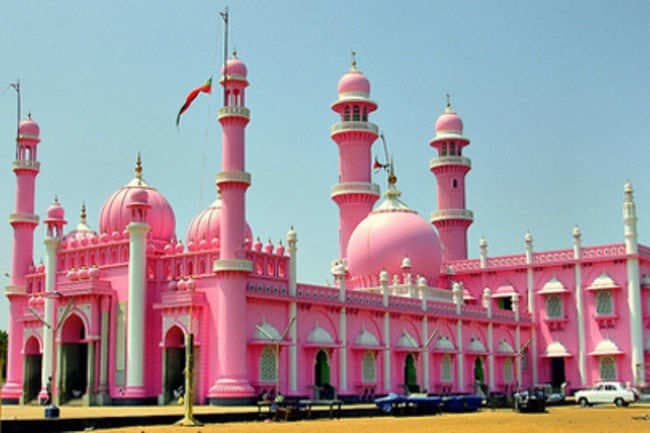
In Trivandrum, the Beemapalli Mosque honors Hazrat Beema Beevi, said to be a descendant of the Prophet himself. Local legend says the wells here — one hot, one cold — hold healing water that never runs dry, even during the worst droughts.
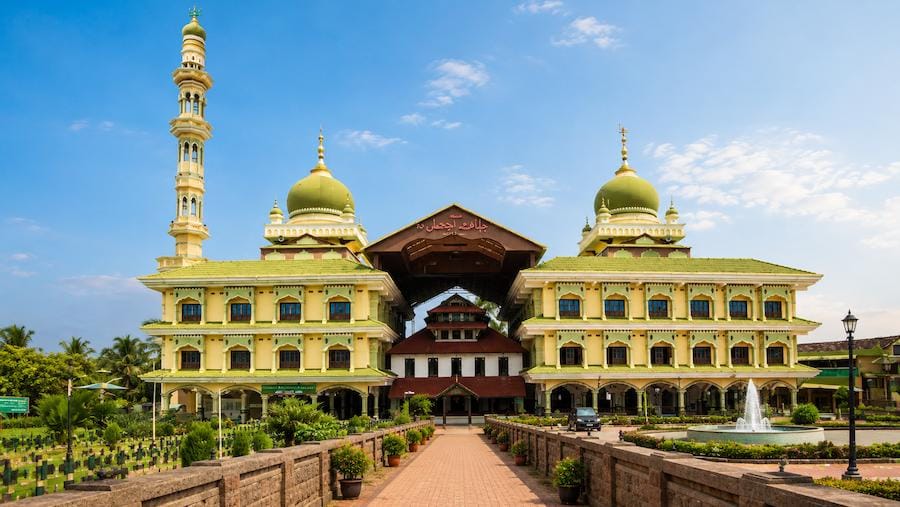
In Kasaragod, the Hazrat Malik Deenar Grand Juma Masjid stands as the second-oldest mosque in the subcontinent — a beautiful two-story building with strong wooden beams, designed almost like a palace.
Calvathy Mosque: A Hidden Gem in Kerala Islamic Heritage
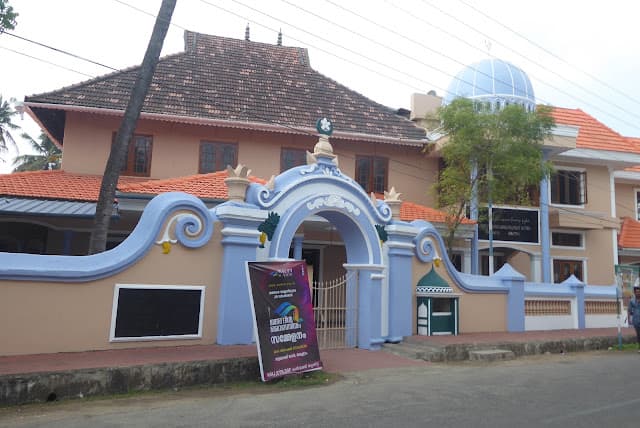
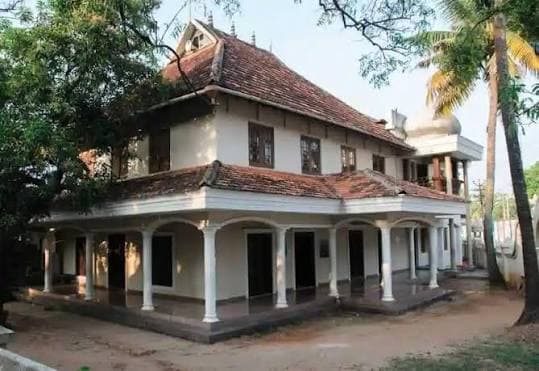
Tucked among Kochi’s bustling streets is another remarkable piece of Kerala Islamic heritage — the Calvathy Mosque, also known as Calvathy Juma Masjid. Built in 1384 by Arab merchants, this mosque has no minarets and features a distinctive wooden ceiling, reflecting a uniquely Kerala style of Islamic architecture. Its name comes from the Arabic word for “open space,” a nod to the Arab tradition of praying in the open air.
The mosque complex is also the resting place of two respected Islamic figures: Hazrat Syed Sanaullah Makti Thangal, a scholar remembered for his pioneering work in Islamic education in Kerala, and Hazrat Fareed Auliya, a preacher whose teachings shaped the local Muslim community for generations. Together, they add another meaningful chapter to Kochi’s rich Islamic heritage, worth exploring on our Kochi Halal travel guide.
Kerala Islamic Heritage: A Living Culture Today
This is Kerala Islamic heritage still alive today — not locked away in old books, but visible in the food, the language, and the buildings all around you. You can taste it in the biryani, hear it in the language, and see it in the architecture of everyday buildings. Kerala’s Muslim community has kept these traditions alive for over 1,400 years, blending Arab, Persian, and local Kerala influences into something truly unique. To learn more about this living culture, explore our piece on Indo-Islamic culture across India.
Plan Your Kerala Islamic Heritage Journey
Kerala Islamic heritage offers Muslim travelers a rare chance to walk through over 1,400 years of history — from ancient mosques to a king who traveled across the sea for his faith. Combine this heritage trail with the natural beauty of Kerala’s backwaters and hill stations by exploring our full Kerala Halal travel guide, covering Kochi, Alleppey, and beyond.
Frequently Asked Questions
What is the oldest mosque in Kerala?
The Cheraman Juma Mosque in Kodungallur, built in 629 CE, is believed to be the oldest mosque in India and one of the oldest in the world.
Who was King Cheraman Perumal?
He was a Kerala king who, according to legend, traveled to Mecca, met Prophet Muhammad, and became one of the first Indian rulers to accept Islam.
Are these mosques open to visitors?
Many of Kerala’s historic mosques, including Cheraman Juma Mosque, welcome respectful visitors and offer guided tours of their heritage museums.
What makes Kerala’s Islamic heritage unique?
Kerala’s Islamic story began through peaceful trade, not conquest — making it one of the gentlest and oldest spreads of Islam anywhere in the world.
Discover more of India’s Islamic heritage with Halal Trip India — explore our full Islamic Heritage of India guide, dive into Indo-Islamic culture across the country, or plan your Kerala Islamic heritage journey with our complete Kerala Halal travel guide.