
Ladakh Taj Mahal Tour: 9-Day Himalayas to Mughals
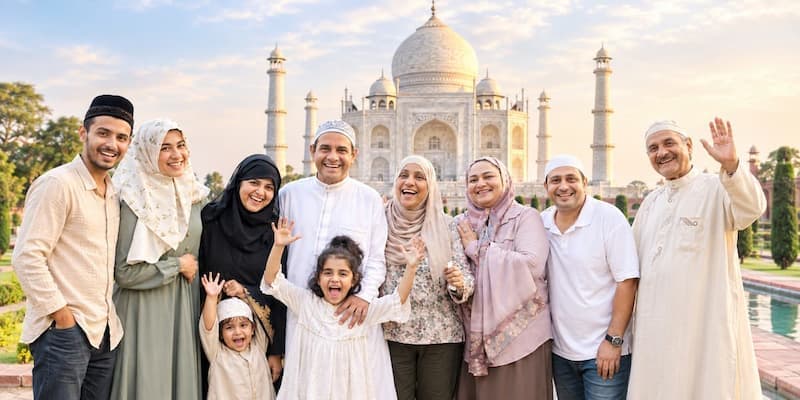
Discover two of India’s most striking landscapes on this Ladakh Taj Mahal Tour, a 9-day journey from the high passes of the Himalayas to the marble domes of Agra. This itinerary is designed for Muslim travelers throughout, with halal food, Muslim-friendly luxury hotels and resorts, and prayer facilities arranged at every stop. It suits a genuine Muslim family leisure tour, and equally works as a Muslim-friendly honeymoon.
Ladakh Taj Mahal Tour at a Glance
Duration: 9 days, 8 nights
Route: 3 nights Leh, 1 night Nubra Valley, 1 night Pangong Lake, 1 night Delhi, 2 nights Agra
Trip highlights: Jama Masjid Leh, Khardung La Pass, Nubra Valley, Pangong Lake, Delhi’s Red Fort, and the Taj Mahal
Day-by-Day Itinerary
Day 1: Ladakh Taj Mahal Tour Begins in Leh
Our representative meets you at Leh Airport and transfers you to your hotel or resort. Because Leh sits above 3,500 meters, however, give yourself the first stretch of the day to rest and let your body settle into the altitude.
Once evening comes, take a gentle first walk through the town. Jama Masjid Leh, Ladakh’s largest mosque, is the natural starting point, its architecture carrying real Indo-Islamic heritage alongside space for prayer. From there, Leh Palace overlooks the town from its hillside, a 16th-century fortress where old murals still describe Ladakh’s past. Halal food is close by for the rest of the evening.
Day 2: Around Leh, History and High-Altitude Scenery
After breakfast, spend the day taking in the sights around Leh, one of the richer days on this Ladakh Taj Mahal Tour. The Hall of Fame Museum comes first, a tribute to the soldiers who have served in the region. From there, Magnetic Hill offers its curious optical trick, a road that appears to pull vehicles uphill.
Continue to the Confluence, where the Indus and Zanskar Rivers meet and visibly change color. Later, Likir Monastery and then Lamayuru round out the day, the latter known for a landscape eroded into something close to lunar, which gave Ladakh its nickname, “the Moon Land.” Because the day mixes sightseeing with genuine altitude, it’s worth taking at an easy pace.
For more on halal dining and prayer while traveling, see our Halal Travel Tips India guide.
Day 3: Over Khardung La to Nubra Valley
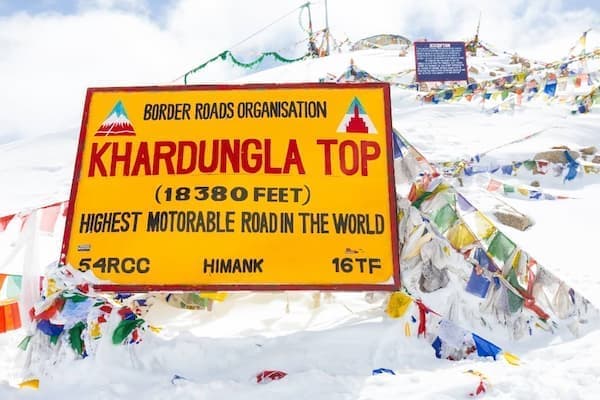
This morning, the drive to Nubra Valley crosses Khardung La Pass, the world’s highest motorable road. Along the way, the views stretch across Leh, its valleys, and the surrounding peaks.
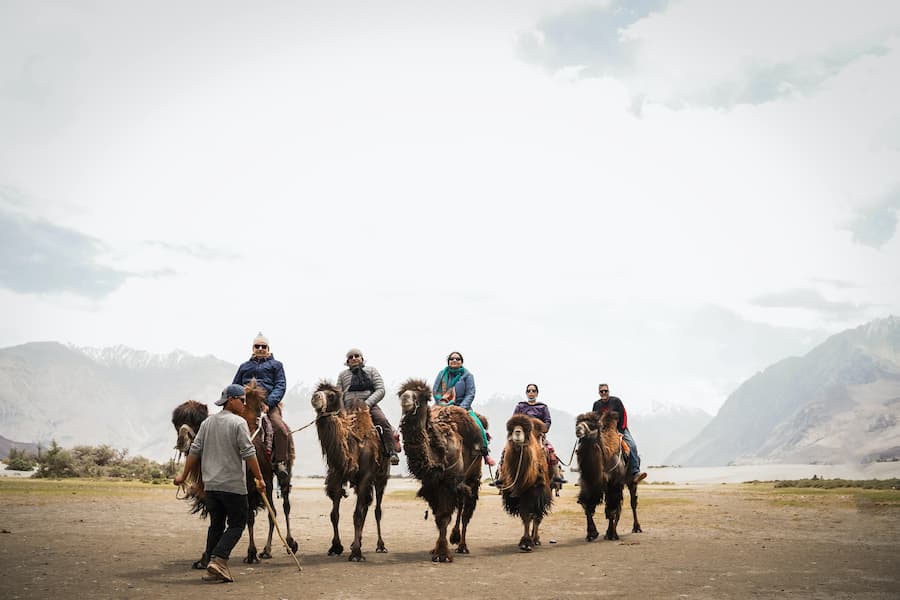
Nubra Valley opens up as a high-altitude desert, known for golden sand dunes and rare double-humped Bactrian camels, a legacy of the old Silk Route. In the afternoon, however, a camel safari across Hunder’s dunes is one of the trip’s genuine highlights. Because mosques are close by here as well, prayer fits easily into the day. Dinner is arranged with halal-friendly options at camp.
Day 4: Nubra Valley Onward to Pangong Lake
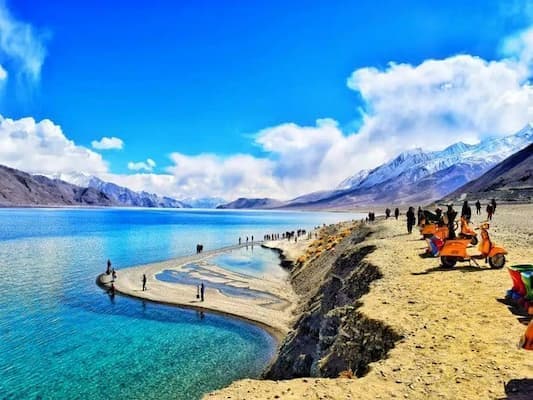
After breakfast, the route continues to Pangong Lake, often described as one of the highest lakes in the world. The drive alone covers some of Ladakh’s most dramatic terrain.
At the lake, the water shifts between blue and emerald as the light moves through the day. For example, the open sky and rugged mountains around Pangong make it a genuine favorite for couples on a Muslim-friendly honeymoon, as well as families looking for a quieter stop. Settle in at your lakeside camp, with time to relax before the evening.
Day 5: Ladakh Taj Mahal Tour, Pangong Lake Back to Leh
Rise early for the sunrise over Pangong Lake, when the water carries a full range of color across its surface. After breakfast, walk further along the shore and stop at the point where the film Three Idiots was shot.
The drive back to Leh retraces the outbound route, giving one more pass through the valleys and mountain roads that define this trip. Because the evening is left free once you’re back in Leh, halal food and prayer-friendly facilities are on hand for whatever pace you’d like.
Day 6: Leh to Delhi, Exploring the Heritage
After breakfast, transfer to Leh Airport for your flight to Delhi, the second stage of this Ladakh Taj Mahal Tour. On arrival, our team greets you and transfers you to your hotel. Later, at your own pace, begin exploring Delhi, where ancient Islamic heritage sits alongside the modern capital.
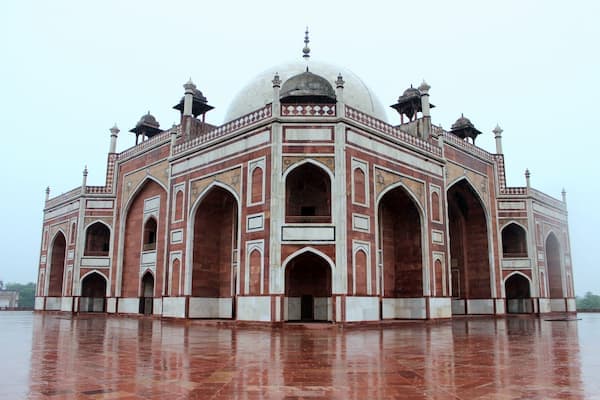
Discover Delhi’s UNESCO World Heritage Sites, the towering Qutub Minar, the tomb of Humayun, the architectural inspiration for the Taj Mahal, and the majestic Red Fort. Wander the historic streets of Shahjahanabad, Old Delhi’s walled city, taking in Jama Masjid, Chandni Chowk’s Mughal bazaars, and halal food along the way. In the evening, see the other side of the capital in New Delhi, with its wide boulevards, India Gate, Rashtrapati Bhavan, and busy markets.
Halal Travel Tips India: Red Fort is closed on Mondays, and Old Delhi’s market is closed on Sundays. Delhi’s Old City is a genuine paradise for Muslim travelers, with countless halal food stalls and Mughlai restaurants.
Day 7: Ladakh Taj Mahal Tour, Delhi to Agra
After breakfast, drive to Agra, the City of the Taj Mahal, on the banks of the Yamuna River. Begin with the Taj Mahal itself, a world wonder and masterpiece of Mughal architecture, built by Emperor Shah Jahan for his beloved Mumtaz Mahal. Continue to Agra Fort, once the seat of Mughal power, and close the day at Itmad-ud-Daulah’s Tomb, often called the “Baby Taj” for the influence it had on the Taj Mahal’s design.
Halal Travel Tips India: The Taj Mahal is closed on Fridays. Restaurants near Jama Masjid and Sadar Bazaar serve Halal Mughlai dishes, including biryani, kebabs, and Agra’s petha sweets.
Day 8: Agra In & Around, Fatehpur Sikri
Begin with a sunrise visit to the Taj Mahal, when the marble takes on a golden glow. After breakfast, however, visit Sikandra, the tomb of Emperor Akbar, set within gardens completed by his son, Emperor Jahangir.
Continue to Fatehpur Sikri, the “City of Victory,” a UNESCO World Heritage Site and former Mughal capital. Its Buland Darwaza and Jama Masjid reflect the same Indo-Islamic heritage found throughout this journey.
Muslim-Friendly Travel India: At Fatehpur Sikri, the Jama Masjid remains active for prayers, giving Muslim travelers a chance to combine spirituality with heritage exploration.
Day 9: Ladakh Taj Mahal Tour Ends with Departure
After breakfast, transfer to Agra Airport or Station, or drive back to Delhi, about 210 kilometers, a journey of three to four hours. Your Ladakh Taj Mahal Tour concludes here, having taken you from the Himalayan passes of Ladakh to the marble grandeur of the Taj Mahal.
Frequently Asked Questions
How is this different from the Ladakh 6-Day Halal Tour?
Our Ladakh 6-Day Halal Tour covers Leh, Nubra Valley, and Pangong Lake alone. This Ladakh Taj Mahal Tour includes the same Ladakh route, then continues to Delhi and Agra for the Taj Mahal.
Is halal food available throughout this trip?
Yes. Halal-certified restaurants and Muslim-friendly hotels are arranged in Leh, Nubra Valley, Pangong Lake, Delhi, and Agra, making this one of the most complete circuits for Halal tourism in India.
Is this tour suitable for a Muslim-friendly honeymoon?
Yes. Pangong Lake’s setting and Agra’s Taj Mahal each offer their own kind of romance, and we can arrange honeymoon resorts and room setups on request.
What is the best time for the Ladakh Taj Mahal Tour?
May to September suits Ladakh best, while October to March is most comfortable for Delhi and Agra.
Explore More Tour Options
Prefer to stay in Ladakh alone? Explore our Leh Pangong Lake Tour, Leh Nubra Valley Tour, or Ladakh 6-Day Halal Tour. For the full destination overview, discover our Ladakh Halal Travel Guide.
Planning a similar combination elsewhere? Explore our Kashmir Taj Mahal Tour or our Lucknow Taj Mahal Tour. For the full picture of Indian Islamic culture across the country, explore our complete Indo-Islamic Heritage guide.
As one of the Best Muslim tour operators in India, Halal Trip India is your trusted Halal Travel Planner for every corner of the country. Learn more about us and start planning your next Muslim-friendly journey today.