
Blog
Humayun’s Tomb Delhi: The Indian Islamic Architectural Marvel
Welcome to our guide to Humayun’s Tomb Delhi — in the 16th century, the Tomb of Mughal Emperor Humayun, a marvel of Indo-Islamic architecture, epitomizes enduring love. Commissioned by Empress Bega Begum, wife of Emperor Humayun, it reflects her deep affection for him.
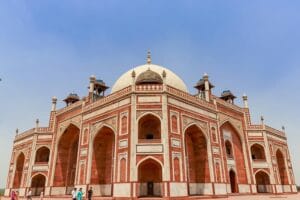
The Commission of Bega Begum
Bega Begum, also called Haji Begum, engaged Persian architects to craft an enduring masterpiece in her husband’s memory. Her stepson, Emperor Akbar, would later inspect the completed tomb in 1571, a fitting tribute to his father’s legacy.
Architectural Innovations
This remarkable structure, Humayun’s Tomb, earned UNESCO World Heritage status in 1993, a global recognition of its historical significance.
Some interesting historical facts about Humayun’s Tomb Delhi:
After Mughal Emperor Humayun’s demise in 1556, his body initially rested at Delhi’s Purana Quila. Later, it traveled to Sirhind, Punjab, witnessed by Khanjar Beg. Emperor Akbar, Humayun’s son, inspected the tomb in 1571 during its completion.
The tomb’s construction spanned 1565 to 1572, costing 1.5 million rupees, funded entirely by grieving Mughal Empress Bega Begum. Devoted to her husband, she dedicated her life to creating a magnificent memorial near the Yamuna River in Delhi.
Ain-i-Akbari, a 16th-century document, notes that Empress Bega Begum oversaw the tomb’s construction after returning from Mecca and completing the Hajj pilgrimage.
According to historian Abd al-Qadir Bada’uni, Persian architect Mirak Mirza Ghiyas designed the tomb but passed away before completion. His son, Sayyed Muhammad ibn Mirak Ghiyathuddin, finished the structure.
In 1611, English merchant William Finch marveled at the rich interior of the tomb, describing luxurious furnishings, carpets, and a shamiana above the cenotaph. It housed Humayun’s sword, turban, and shoes, surrounded by copies of the Quran.

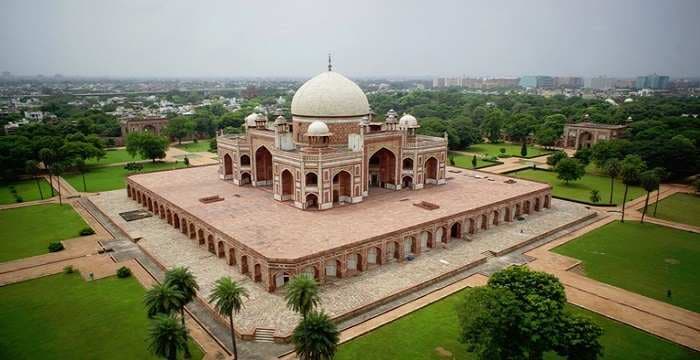
In the realm of Indo-Islamic architecture, Humayun’s tomb is a masterpiece where Persian and Indian craftsmen collaborated. This garden tomb surpasses any built before in the Islamic world, boasting grandeur and scale.
During the Mughal era (16th to 19th century), the practice of commissioning monuments gained momentum through the efforts of Mughal Empress Bega Begum in constructing Humayun’s Tomb. This eminent monumental mausoleum in India is an early masterpiece that decisively influenced the design of the later Taj Mahal, the pinnacle of Indo-Islamic architecture.
It is widely believed that Humayun’s Tomb served as the inspiration for the Taj Mahal. Since Bega Begum built Humayun’s Tomb in memory of her husband, Mughal Emperor Shah Jahan found inspiration to create a grand monument after the demise of his beloved wife, Mumtaz Mahal. The Taj Mahal, constructed almost a century later, draws significant inspiration in design and architecture from Humayun’s Tomb.
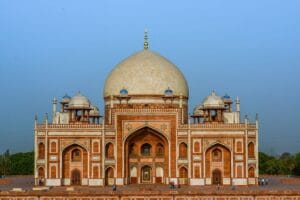
Noteworthy innovations include a char-bagh, inspired by the Quran’s paradise description. The exterior’s breathtaking view showcases the first garden-tomb in the Indian subcontinent, employing a Persian double tomb.
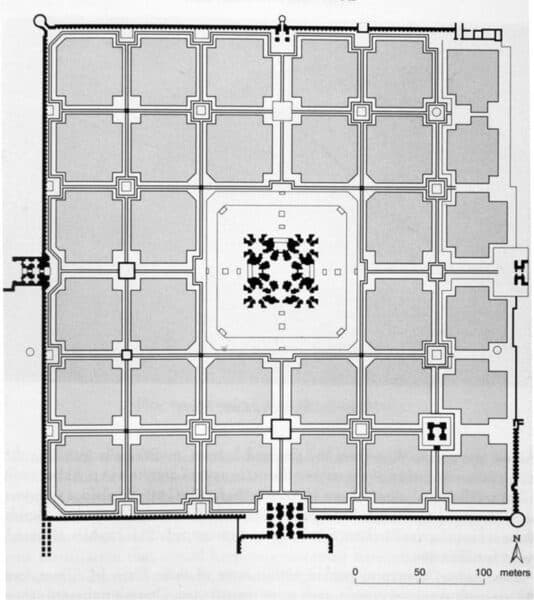
The exterior view of Humayun’s Tomb is breathtaking, as it was the first garden tomb built in the Indian subcontinent and the first tomb to employ a Persian double-dome design in its construction. The scenic beauty of this historical and architectural marvel leaves visitors mesmerized.
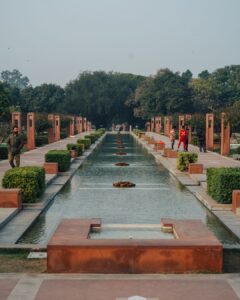
Amidst the historical and architectural marvel, the tomb stands near Hazrat Nizamuddin Auliya’s Dargah Shrine. This location, densely packed with medieval Islamic heritage, reflects seven centuries of tomb building.
Dubbed the ‘dormitory of the Mughals,’ over 100 Mughal family members rest in the tomb’s cells. The interior, a vast octagonal chamber, houses Emperor Humayun’s grave, surrounded by rooms containing the tombs of his wives and later Mughals. Identification remains uncertain due to the lack of inscriptions.
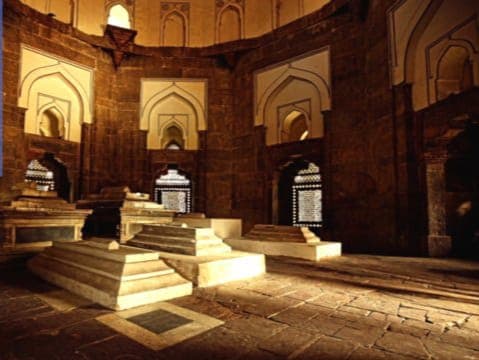
The Dome & Architectural Details
The dome atop Humayun’s Tomb stands 42.5 meters tall and can be accessed via an internal staircase. The tomb’s design is remarkable for its intertwined, tiered platforms, giving the structure a delicate yet imposing presence. Exhibiting Mughal architectural brilliance, the tomb’s interiors once featured rich carpets and a shamiana, exuding royal grandeur.
A Pioneer of Mughal Mausoleum Design
Humayun’s Tomb was the first of the grand dynastic mausoleums that would come to define Mughal architecture, with the style reaching its zenith 80 years later in the Taj Mahal — a testament to how deeply this Mughal architectural tradition shaped India’s most celebrated monuments.
Within the wider complex lie several other 16th-century Mughal garden tombs, including Nila Gumbad, Isa Khan’s Tomb, Bu Halima Garden, Afsarwala, Barber’s Tomb, and the Arab Serai, where the site’s craftsmen once resided.
The Isa Khan Tomb Complex
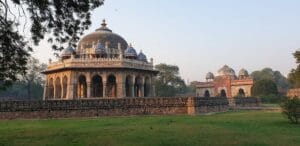
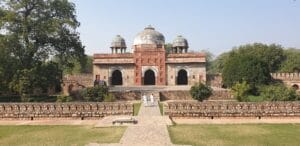
Leading to Humayun’s main tomb, several smaller monuments — including Isa Khan Niyazi’s tomb — predate it by twenty years, constructed in 1547 CE. This walled complex is the resting place of Isa Khan Niyazi, a noble of influence at the court of Emperor Sher Shah Suri, and encloses both a mosque and an octagonal tomb built in the distinctive Sur architectural style. An inscription on a sandstone slab above the mihrab dates the tomb’s construction to the Hijra year 954 (1547–1548 CE). Fittingly, this complex is the first historic structure visitors encounter upon entering the World Heritage Site — a graceful introduction to the grandeur that awaits at Humayun’s Tomb itself.
Whether you’re drawn to the history, architecture, or spiritual legacy of Humayun’s Tomb Delhi, discover the captivating allure of India as a destination tailored for Muslim-friendly tours, from its Halal-friendly destinations to its rich Islamic heritage and Indo-Islamic culture. At Halal Trip India, we craft seamless Muslim-friendly holidays and heritage tours across the country, ensuring every journey blends comfort, culture, and unforgettable memories.
Continue exploring Delhi’s Mughal heritage — visit the nearby Qutub Minar Complex, take a deeper Delhi Islamic Heritage Tour, or read more of the pan-India story in our full heritage guide above. Ready to experience Delhi’s Mughal grandeur for yourself? Explore our Halal holiday packages and start planning your next Muslim-friendly journey across India.